Guía de selladores de concreto: tipos, usos y cuándo aplicarlos
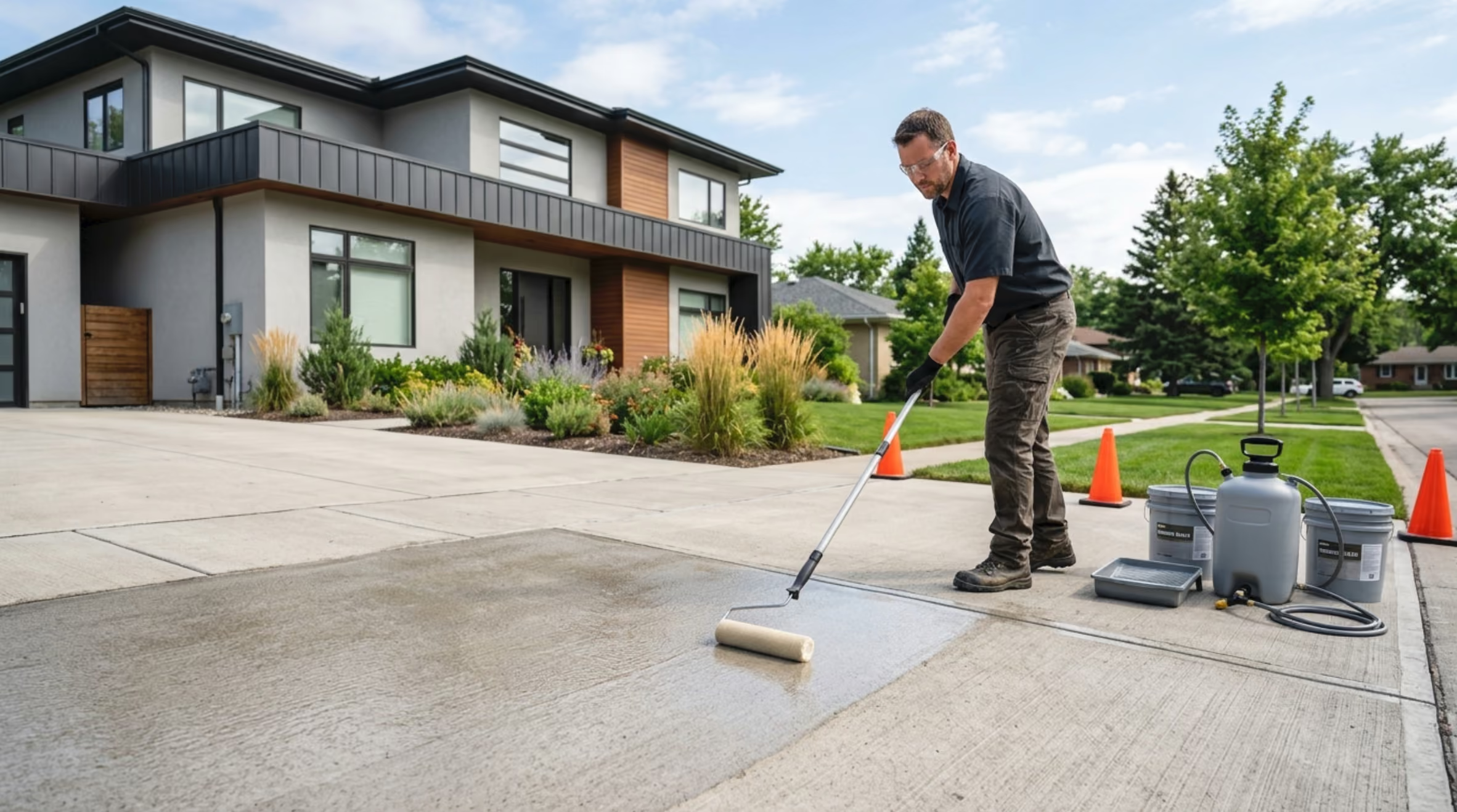
Guía de selladores para concreto: tipos, usos y cuándo aplicarlos
El concreto es uno de los materiales de construcción más duraderos utilizados en hogares, edificios comerciales, almacenes, patios, entradas de vehículos, sótanos e instalaciones industriales. Sin embargo, a pesar de su resistencia, el concreto sigue siendo vulnerable a la humedad, las manchas, el aceite, los productos químicos y el desgaste superficial con el paso del tiempo.
Es por eso que el sellado de concreto es una parte importante de la protección a largo plazo del concreto.
Un sellador para concreto de calidad ayuda a minimizar la absorción de agua, prevenir manchas, reducir la formación de polvo, mejorar la durabilidad y prolongar la vida útil de las superficies de concreto. Algunos selladores también mejoran la apariencia al añadir color o un acabado decorativo.
Sin embargo, no todos los selladores cumplen el mismo propósito. Los productos diseñados para pisos interiores pueden no funcionar bien en entradas de vehículos, mientras que los selladores decorativos difieren de los sistemas de impermeabilización creados para aplicaciones comerciales.
En Rebotec USA, ayudamos a contratistas, constructores, propietarios y distribuidores a seleccionar los productos adecuados de impermeabilización y protección de concreto para proyectos residenciales, comerciales e industriales.
¿Necesita asesoramiento experto? Llame a Rebotec USA al +1 (469) 352-3379.
¿Qué es el sellado de concreto?
El sellado de concreto es el proceso de aplicar una capa protectora o un tratamiento penetrante al concreto para reducir la absorción de agua, las manchas, la intrusión de humedad y el desgaste superficial.
Un sellador para concreto puede:
- Penetrar en el concreto
- Formar una capa protectora en la superficie
- Realzar el color o la apariencia
- Repeler el agua
- Proteger contra manchas
- Mejorar la durabilidad
- Reforzar los sistemas de impermeabilización
También es posible que encuentre términos de búsqueda como siler para concreto o sealer para concreto, que generalmente se refieren a productos diseñados para proteger el concreto de la humedad y el deterioro.
Por qué el concreto necesita un sellador
Aunque el concreto parece sólido, contiene poros microscópicos que permiten la penetración de humedad y contaminantes.
Sin protección, el concreto puede absorber:
- Agua
- Aceite
- Suciedad
- Productos químicos
- Sal
- Otros contaminantes
Beneficios de sellar el concreto
Aplicar un sellador de concreto ayuda a:
- Reducir la absorción de agua
- Prevenir manchas
- Facilitar la limpieza
- Minimizar la formación de polvo
- Aumentar la durabilidad
- Proteger los acabados decorativos
- Reducir los daños relacionados con la humedad
- Prolongar la vida útil del concreto
Para áreas expuestas a una humedad significativa, un sellador de concreto impermeable o una solución de impermeabilización integral pueden ofrecer una mejor protección a largo plazo.
Tipos de selladores de concreto
El mejor sellador de concreto depende de dónde se encuentre el concreto, cómo se utilice y el nivel de protección requerido.
1. Selladores de concreto penetrantes
Los selladores penetrantes se absorben en el concreto en lugar de formar una capa superficial gruesa.
Ideal para
- Entradas de vehículos
- Patios
- Aceras
- Hormigón exterior
- Muros de hormigón
- Mampostería
- Superficies exteriores comerciales
Beneficios
- Mantiene el aspecto natural
- Repele el agua
- Preserva la tracción de la superficie
- Reduce la absorción de humedad
Limitaciones
Protegen principalmente la superficie tratada y pueden no ser adecuados para áreas sometidas a presión hidrostática constante o agua estancada.
2. Selladores de siloxano para hormigón
Los selladores de siloxano son productos penetrantes diseñados específicamente para hormigón y mampostería exteriores.
Aplicaciones comunes
- Muros exteriores
- Entradas de vehículos
- Pasarelas
- Estacionamientos
- Bloques de hormigón
- Mampostería
Beneficios
- Excelente repelencia al agua
- Acabado transpirable
- Adecuado para exposición a la intemperie
3. Selladores acrílicos para concreto
Los selladores acrílicos crean una fina película protectora que realza la apariencia del concreto.
Ideal para
- Concreto decorativo
- Concreto estampado
- Concreto de color
- Patios
- Senderos
- Concreto en interiores
Beneficios
- Realza el color
- Disponible en acabados mate o brillante
- Fácil de aplicar
- Económico
Consideraciones
Los selladores acrílicos suelen desgastarse más rápido en entornos de alto tráfico que los recubrimientos de mayor resistencia.
4. Sellador de poliuretano para concreto
Los selladores de poliuretano ofrecen una capa protectora más resistente que los selladores acrílicos.
Usos comunes
- Pisos comerciales
- Pisos de garaje
- Almacenes
- Edificios comerciales
- Instalaciones industriales
- Concreto interior
Beneficios
- Alta resistencia a la abrasión
- Excelente resistencia química
- Durabilidad prolongada
- Protección sólida contra el desgaste diario
Una preparación adecuada de la superficie es esencial para un rendimiento óptimo.
5. Sellador de concreto a base de aceite
Los selladores a base de aceite ofrecen resistencia a la humedad y protección de la superficie en aplicaciones específicas.
Beneficios
- Acabado duradero
- Buena resistencia a la humedad
Consideraciones
- Olor más fuerte
- Tiempo de secado más prolongado
- Se requiere ventilación adecuada para uso en interiores
6. Pintura selladora para concreto
La pintura selladora para concreto combina color decorativo con protección de la superficie.
Aplicaciones comunes
- Pisos de sótanos
- Pisos de garajes
- Cuartos de servicio
- Concreto decorativo
- Pisos interiores
Aunque estos productos mejoran la apariencia, siguen siendo recubrimientos superficiales y pueden fallar si la humedad asciende a través del concreto.
7. Sellador para concreto con arena
Los selladores antideslizantes incorporan arena o aditivos para aumentar la tracción.
Ideal para
- Áreas de piscina
- Escalones
- Pasarelas
- Patios
- Suelos comerciales mojados
Verifique siempre la compatibilidad entre el sellador y el aditivo antideslizante antes de la aplicación.
Sellador de hormigón para interiores frente a exteriores
Selladores de hormigón para interiores
Los productos para interiores están formulados para espacios cerrados y suelen destacar por:
- Menor olor
- Fácil mantenimiento
- Resistencia a las manchas
- Apariencia decorativa
Las aplicaciones comunes incluyen:
- Sótanos
- Garajes
- Cuartos de servicio
- Suelos interiores
Selladores de hormigón para exteriores
Los selladores para exteriores están diseñados para resistir:
- Lluvia
- Exposición a los rayos UV
- Cambios de temperatura
- Tráfico intenso
- Desgaste superficial
Las aplicaciones típicas incluyen:
- Entradas de vehículos
- Patios
- Aceras
- Muros exteriores
- Senderos
- Escalones
Sellador de hormigón impermeable frente a sellador de hormigón convencional
Un sellador de hormigón impermeable se centra en reducir la intrusión de humedad y la absorción de agua.
Un sellador de hormigón convencional protege principalmente contra:
- Manchas
- Suciedad
- Polvo
- Desgaste superficial
- Pérdida de color decorativo
Los selladores impermeables pueden incluir:
- Selladores penetrantes
- Recubrimientos impermeables
- Pintura selladora para concreto
- Selladores impermeables en aerosol
- Productos impermeabilizantes comerciales
Sellador para concreto frente a epoxi
Muchos propietarios comparan el sellador para concreto y el epoxi al elegir una protección para sus suelos.
Sellador para concretoEpoxiRecubrimiento protector finoSistema de recubrimiento gruesoResistencia al agua y a las manchasProtección de alta resistenciaMejora decorativaDurabilidad de grado industrialAplicación más sencillaInstalación más compleja
Elija un sellador para concreto si necesita
- Resistencia al agua
- Protección contra manchas
- Mejora decorativa
- Protección básica de la superficie
Elija epoxi si necesita
- Resistencia al tráfico intenso
- Protección química
- Suelos industriales
- Recubrimiento protector grueso
Si hay humedad filtrándose a través de la losa, se debe solucionar el problema de impermeabilización antes de instalar el epoxi.
¿Cuánto tarda en secarse el sellador de concreto?
El tiempo de secado depende de:
- El tipo de producto
- La temperatura
- La humedad
- El estado de la superficie
- El grosor de la aplicación
Los tiempos de secado habituales son:
- Seco al tacto: Unas pocas horas
- Tráfico peatonal ligero: Alrededor de 24 horas
- Tráfico intenso: 48–72 horas
- Curado completo: Varía según el fabricante
Siga siempre las instrucciones del fabricante.
Cuándo aplicar el sellador de concreto
El concreto debe estar:
- Limpio
- Seco
- Libre de polvo
- Libre de aceite
- Libre de residuos sueltos
Antes de aplicar
- Limpie a fondo
- Elimine manchas y contaminantes
- Deje secar el concreto completamente
- Verifique las condiciones climáticas
- Siga las recomendaciones de temperatura
- Deje que el concreto nuevo cure adecuadamente
- Pruebe primero en un área pequeña
Para aplicaciones en exteriores, evite sellar justo antes de que llueva o durante temperaturas extremas.
Cómo elegir el sellador de concreto adecuado
Antes de seleccionar un producto, considere las siguientes preguntas.
¿El concreto está:
- En interiores o exteriores?
- En un piso o una pared?
- Es decorativo o estructural?
- Es residencial o comercial?
¿Necesita:
- ¿Impermeabilización?
- ¿Protección contra manchas?
- ¿Alta resistencia?
- ¿Mejora decorativa?
¿Estará expuesto a:
- ¿Tránsito peatonal?
- ¿Tránsito vehicular?
- ¿Productos químicos?
- ¿Humedad?
- ¿Presión hidrostática?
Elegir el producto adecuado depende de equilibrar la apariencia, la durabilidad y los requisitos de impermeabilización.
¿Necesita ayuda para elegir un sellador de concreto?
Con tantas opciones disponibles, incluyendo selladores penetrantes, selladores acrílicos, recubrimientos de poliuretano, sistemas de impermeabilización y acabados decorativos, puede ser difícil determinar qué producto se adapta mejor a su proyecto.
Rebotec USA ayuda a sus clientes a seleccionar los productos adecuados de protección e impermeabilización de concreto para aplicaciones residenciales, comerciales e industriales.
Llame al +1 (469) 352-3379 para hablar con un especialista en productos.
Conclusión
El sellado de concreto es una de las formas más efectivas de proteger el concreto contra el agua, las manchas, los productos químicos, la abrasión y el deterioro a largo plazo.
Ya sea que esté sellando una entrada de vehículos, el piso de un sótano, un garaje, un patio, un almacén o una instalación comercial, seleccionar el sellador adecuado mejorará la durabilidad, simplificará el mantenimiento y extenderá la vida útil de su concreto.
Rebotec USA ofrece soluciones avanzadas de protección e impermeabilización de concreto diseñadas para satisfacer las necesidades de proyectos residenciales, comerciales e industriales.
Comuníquese hoy mismo con el equipo de Rebotec USA para recibir recomendaciones de productos por parte de expertos.
Preguntas frecuentes
¿Qué es el sellado de concreto?
El sellado de concreto es el proceso de aplicar un tratamiento protector que reduce la absorción de agua, las manchas, el desgaste y los daños por humedad.
¿Cuál es el mejor sellador para concreto?
El mejor sellador depende de la superficie, la ubicación y el nivel de protección requerido.
¿Es un sellador de concreto impermeable diferente a un sellador común?
Sí. Los selladores impermeables están formulados específicamente para reducir la penetración de humedad, mientras que los selladores estándar suelen centrarse en la resistencia a las manchas y la protección de la superficie.
¿Qué es la pintura selladora para concreto?
La pintura selladora para concreto combina color decorativo con una capa protectora para superficies de concreto en interiores.
¿Se puede usar sellador de concreto en interiores?
Sí. Utilice productos diseñados específicamente para entornos interiores y siga las recomendaciones de ventilación.
¿Se puede usar sellador de concreto en exteriores?
Sí. Los selladores de grado exterior protegen entradas de vehículos, patios, senderos y otras superficies de concreto al aire libre contra el clima y la humedad.
¿Cuál es la diferencia entre el sellador de concreto y el epoxi?
Los selladores de concreto ofrecen una protección más ligera y resistencia al agua, mientras que el epoxi crea un revestimiento para pisos más grueso y duradero.
¿Cuánto tiempo tarda en secar el sellador de concreto?
Los tiempos de secado varían, pero la mayoría de los productos permiten el tránsito peatonal ligero en 24 horas y el uso intenso después de 48 a 72 horas.
¿Qué es el sellador de concreto con arena?
Es un sellador mezclado con aditivos antideslizantes que mejoran la tracción en superficies mojadas o de alto tránsito.
¿Quién puede ayudarme a elegir el sellador de concreto adecuado?
Rebotec USA puede recomendarle la solución de protección e impermeabilización de concreto ideal para su proyecto.
📞 Llame al +1 (469) 352-3379