Basement Waterproofing: Methods, Products, and Cost
Basement Waterproofing: Methods, Products, and Cost
A wet basement can lead to more than a small puddle on the floor. Water and excess moisture may cause mold, musty odors, damaged finishes, peeling paint, concrete deterioration, and corrosion of reinforcing steel. If the water problem continues, it can also reduce the usefulness and value of the space.
Effective basement waterproofing starts by identifying where the water is coming from. A waterproof coating may help with light surface moisture, but it will not correct every leak. Some basements need crack repairs. Others need exterior excavation, drainage improvements, a sump pump, or a complete waterproofing system.
The best basement waterproofing method depends on the basement’s construction, the source of the water, the condition of the walls and floor, and the amount of pressure behind the moisture.
Rebotec USA provides mineral-based waterproofing products for concrete and mortar used in residential, commercial, and industrial construction. For help evaluating concrete basement waterproofing products, call Rebotec USA at +1 469-352-3379.
What Is Basement Waterproofing?
Basement waterproofing is the process of preventing or controlling water that enters through basement walls, floors, joints, cracks, and penetrations.
A complete system may include:
- Basement sealing
- Crack and joint repairs
- Waterproof coatings
- Exterior membranes
- Foundation drainage
- Interior drainage channels
- Sump pumps
- Concrete waterproofing additives
- Vapor control
- Grading and gutter improvements
The goal is not simply to hide damp spots. The goal is to control water before it damages the basement or surrounding structure.
Common Signs of a Wet Basement
Wet basement waterproofing may be needed when you notice:
- Water on the basement floor
- Damp concrete walls
- White mineral deposits
- Peeling paint or coatings
- Musty odors
- Mold or mildew
- Rust stains
- Water entering around pipes
- Wet wall-to-floor joints
- Cracks that leak during rain
- Damaged drywall or flooring
- High indoor humidity
White mineral deposits on concrete are called efflorescence. They form when water moves through the concrete, carries dissolved salts to the surface, and then evaporates.
Efflorescence does not always mean that the wall is structurally damaged, but it is a clear sign that moisture is moving through the material.
Where Basement Water Comes From
Before choosing waterproof basement products, determine the source of the moisture.
Rainwater and Poor Drainage
Water may collect near the foundation because of:
- Clogged gutters
- Short downspouts
- Soil sloping toward the house
- Settled backfill
- Poor yard drainage
- Damaged exterior drains
Correcting these issues may reduce the amount of water reaching the foundation.
Groundwater and Hydrostatic Pressure
Water in the surrounding soil can press against basement walls and beneath the floor. This pressure is called hydrostatic pressure.
It may force water through:
- Concrete pores
- Cracks
- Construction joints
- Block walls
- Floor-to-wall connections
- Pipe penetrations
A simple basement waterproofing sealer may not be enough when heavy pressure is present.
Concrete Cracks
Cracks may form because of:
- Concrete shrinkage
- Settlement
- Temperature changes
- Structural movement
- Improper construction
- Soil movement
Some cracks remain dry. Others become direct water-entry points during rain or high groundwater conditions.
Plumbing and Interior Moisture
Not every wet basement problem comes through the foundation. Plumbing leaks, condensation, appliance drainage, and high indoor humidity can create similar symptoms.
The water source should be confirmed before installing a waterproofing system.
Best Basement Waterproofing Methods
The best basement waterproofing approach may involve an interior method, exterior method, or combination of both.
Exterior Basement Waterproofing
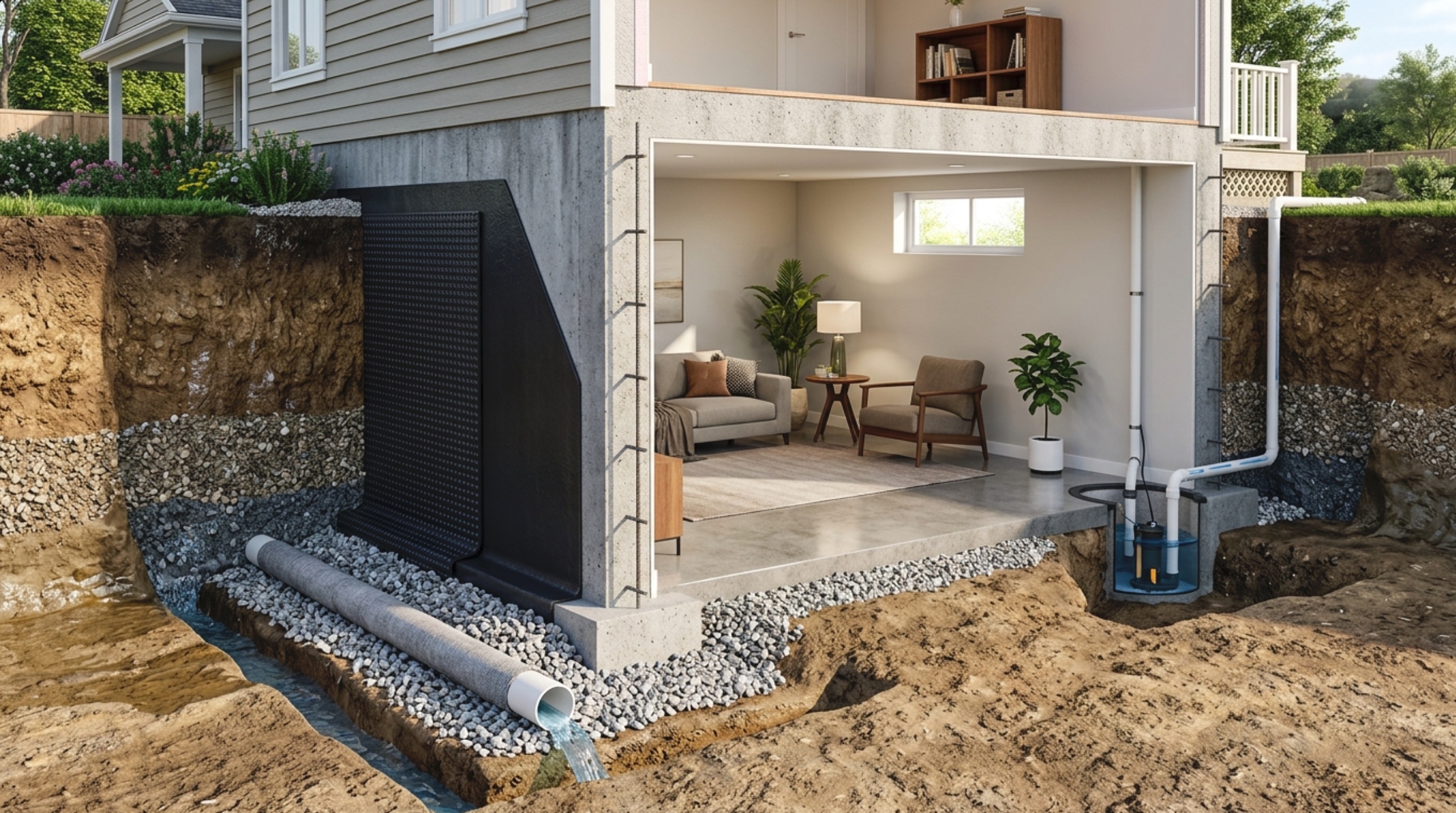
Exterior or outside basement waterproofing is installed on the soil-facing side of the foundation. It is often considered the most complete approach because it stops water before it enters the wall.
A typical exterior system may include:
- Excavating around the foundation
- Cleaning and repairing the foundation wall
- Sealing cracks and penetrations
- Applying an exterior membrane or coating
- Installing protection or drainage board
- Repairing or installing a perimeter drain
- Backfilling carefully
- Correcting the final soil grade
Common exterior basement waterproofing products include:
- Sheet membranes
- Liquid-applied membranes
- Cementitious coatings
- Rubberized coatings
- Drainage mats
- Protection boards
- Foundation sealants
- Exterior basement waterproofing material
The main advantage is that water is stopped before it reaches the interior. The disadvantage is that excavation can be disruptive, labor intensive, and expensive.
Exterior work may also be difficult when patios, driveways, utility lines, landscaping, or nearby buildings block access.
Interior Basement Waterproofing
Interior basement waterproofing is completed from inside the basement. It can be practical when exterior access is limited or when the system is intended to collect and manage water after it enters.
Interior methods may include:
- Waterproof coatings
- Basement waterproofing sealer
- Crack injection
- Interior drainage channels
- Sump pumps
- Vapor barriers
- Wall drainage panels
Interior waterproofing may control leaks and direct water to a safe discharge point. However, it may not keep the foundation wall itself dry.
For example, an interior drainage system may collect water at the wall-to-floor joint and send it to a sump pump. This can keep the finished space dry even though moisture still reaches the exterior side of the wall.
Interior Drainage and Sump Pumps
An interior drainage system is often installed around the basement perimeter. The floor is opened near the wall, a drain is installed, and the system directs water to a sump basin.
A sump pump then moves the water outside.
This method can be useful for:
- Rising groundwater
- Leaking floor-to-wall joints
- Recurring basement water
- Block walls that collect water
- Basements where exterior excavation is impractical
A sump system depends on power and proper discharge. Battery backup, alarms, pump maintenance, and discharge routing may be important.
Crack Repair and Injection
Certain basement wall cracks can be repaired with injected materials.
Common injection products include:
- Epoxy
- Polyurethane foam
- Flexible resins
- Cementitious repair materials
Epoxy may be used to restore strength in stable cracks. Flexible polyurethane products may be used to stop certain active water leaks.
Crack injection is not the right solution for every condition. Structural movement, multiple cracks, drainage issues, or major settlement should be evaluated by an appropriate professional.
Integral Concrete Waterproofing
Integral waterproofing is added directly to concrete or mortar during mixing.
Instead of relying only on an exterior coating, the waterproofing properties become distributed throughout the concrete.
This method is best suited to:
- New basement construction
- New foundation walls
- New basement floors
- Concrete repairs using new material
- Concrete block or mortar applications
- Projects where long-term water resistance is required
Rebotec Admix Powder is a mineral-based product designed to create hydrophobic properties within concrete or mortar. After it is mixed and cured, it becomes an integral part of the material.
Integral waterproofing does not replace good drainage, joint detailing, crack control, or proper construction. It is one part of a complete waterproofing strategy.
Basement Waterproofing Products
There is no single best basement waterproofing product for every problem. Products should be chosen based on the wall material, water pressure, location, and application.
Basement Waterproofing Sealer
A basement waterproofing sealer helps reduce water absorption through concrete or masonry.
Sealers may be:
- Penetrating
- Film forming
- Clear
- Colored
- Water based
- Solvent based
- Designed for positive- or negative-side exposure
The best basement waterproofing sealer should be compatible with the substrate and rated for the expected moisture conditions.
A sealer can help with porous concrete and light moisture, but it may not stop active leaks or heavy hydrostatic pressure.
Basement Waterproofing Coating
A basement waterproofing coating creates a protective layer over the wall or floor.
Common options include:
- Cementitious coatings
- Elastomeric coatings
- Mineral-based coatings
- Acrylic coatings
- Rubberized products
- Epoxy products
- Polyurethane products
The coating should be selected based on:
- Interior or exterior use
- Concrete or concrete block
- Positive- or negative-side pressure
- Crack movement
- Surface moisture
- Required thickness
- Cure time
- Future finishes
Surface preparation is essential. A coating applied over dust, loose paint, efflorescence, oil, or weak concrete may peel or lose adhesion.
Spray-On Basement Waterproofing
Spray-on basement waterproofing can cover large areas and irregular surfaces efficiently.
Products may include:
- Liquid membranes
- Elastomeric coatings
- Rubberized asphalt
- Acrylic systems
- Polyurethane systems
- Other specialty coatings
A basement waterproofing spray may create a continuous layer with fewer seams than sheet material. However, the installer must apply the correct thickness.
Thin areas, pinholes, overspray, poor preparation, and weather conditions can affect performance.
Basement Waterproofing Tar
Basement waterproofing tar is a common term for asphalt-based foundation coatings.
Traditional tar-like coatings may help resist soil moisture, but dampproofing and true waterproofing are not always the same.
Dampproofing may reduce moisture movement under ordinary soil conditions. A waterproofing system is generally expected to provide stronger protection against liquid water and pressure.
Before using basement waterproofing tar, determine whether the product is rated for:
- Below-grade use
- Hydrostatic pressure
- Crack bridging
- Exterior exposure
- The specific foundation material
Color and thickness alone do not confirm waterproofing performance.
Sheet Waterproofing Membranes
Sheet membranes are applied to the exterior foundation wall and joined at seams.
Potential benefits include:
- Consistent manufactured thickness
- Strong water barrier
- Compatibility with drainage systems
- Use on below-grade walls
Potential weaknesses include:
- Seams
- Corners
- Penetrations
- Punctures
- Poor termination details
Protection board is often installed before backfilling to reduce the risk of damage.
Concrete Block Basement Waterproofing
Concrete block basement waterproofing can be more complicated than waterproofing poured concrete.
Block walls contain:
- Mortar joints
- Hollow internal cells
- Multiple connected pathways
- Possible reinforcement
- Horizontal and vertical joints
Water can enter one area and move inside the wall before becoming visible somewhere else.
Concrete block basement waterproofing may involve:
- Exterior membrane
- Mortar-joint repair
- Crack repair
- Interior drainage
- Sump pump
- Waterproof coating
- Sealed penetrations
- Improved exterior drainage
Painting the interior face may help with surface moisture, but it may not stop water stored inside the block wall.
Concrete Crawl Spaces and Basement Waterproofing
Concrete crawl spaces and basement waterproofing share many of the same goals: control water, lower humidity, and protect the structure.
Crawl-space moisture may come from:
- Exposed soil
- Foundation walls
- Groundwater
- Plumbing leaks
- Exterior drainage
- Humid air
Possible solutions include:
- Ground vapor barriers
- Wall sealing
- Drainage
- Sump pumps
- Dehumidification
- Foundation coatings
- Integral waterproofing in new concrete
- Sealed vents or controlled ventilation
A crawl space should be evaluated as part of the entire building moisture system, not as a separate isolated area.
What Is the Best Product to Waterproof Basement Walls?
The best product to waterproof basement walls depends on the source and severity of the water.
Consider these general situations:
- Light surface dampness: A compatible penetrating sealer or coating may help.
- Leaking crack: A crack repair or injection product may be needed.
- Water pressure from outside: Exterior waterproofing and drainage may be needed.
- Concrete block wall: Joint repair, drainage, coatings, and possibly exterior treatment may be required.
- New concrete foundation: An integral waterproofing additive may be included in the concrete mix.
- Recurring floor water: Interior drainage and a sump pump may be appropriate.
- Finished basement: Moisture must be controlled before installing drywall, flooring, or insulation.
The best basement waterproofing products solve the actual source of water rather than simply covering the visible stain.
How Much Does Waterproofing a Basement Cost?
The answer to “How much does waterproofing a basement cost?” depends heavily on the repair method and project conditions.
A small crack repair or limited coating application may be relatively affordable. A complete exterior excavation and waterproofing system may cost substantially more because it involves labor, access, drainage, wall preparation, materials, and restoration.
Cost factors include:
- Basement size
- Foundation depth
- Poured concrete or block construction
- Interior or exterior access
- Amount of excavation
- Number of cracks
- Water pressure
- Drainage conditions
- Sump pump requirements
- Landscaping or concrete removal
- Product type
- Labor rates
- Structural repairs
- Local permitting
- Warranty requirements
Basement waterproofing projects generally fall into several levels.
Minor Repairs
These may include:
- Sealing a small crack
- Repairing a pipe penetration
- Improving downspouts
- Applying a small amount of coating
- Correcting minor grading
Interior Water Management
These projects may include:
- Interior perimeter drain
- Sump basin
- Sump pump
- Wall drainage panels
- Floor repairs
- Backup pump
Exterior Waterproofing
Exterior work may include:
- Excavation
- Foundation repair
- Exterior coating or membrane
- Drainage board
- Perimeter drain
- Backfill
- Landscaping or pavement restoration
Because costs vary widely, a site inspection is usually needed before giving a reliable price.
The cheapest option is not always the least expensive over time. A low-cost coating that does not address groundwater pressure may fail and lead to repeated repairs.
How to Choose a Basement Waterproofing Contractor
For major water problems, consider working with a qualified contractor.
Ask potential contractors:
- What is causing the water?
- How did you confirm the source?
- Are you recommending water prevention or water management?
- Why is this method appropriate?
- How will cracks and joints be treated?
- What products will be used?
- Is the system designed for hydrostatic pressure?
- How will drainage be handled?
- What maintenance is required?
- What does the warranty cover?
- Are finishes and landscaping restoration included?
A trustworthy contractor should explain both the benefits and limitations of the proposed method.
Common Basement Waterproofing Mistakes
Common mistakes include:
- Painting over active leaks
- Ignoring gutters and drainage
- Applying coatings to wet or dirty concrete
- Failing to repair cracks
- Choosing dampproofing when waterproofing is needed
- Trapping moisture behind finished walls
- Installing flooring before testing slab moisture
- Allowing sump discharge near the foundation
- Skipping backup power for a critical sump pump
- Assuming one product solves every water problem
Successful basement waterproofing requires the products, drainage, repairs, and construction details to work together.
Get Help Choosing Concrete Waterproofing Products
Rebotec USA helps contractors, builders, distributors, and property owners evaluate mineral-based waterproofing products for concrete and mortar.
Rebotec products may support basement and foundation applications such as:
- New concrete walls
- New basement slabs
- Concrete repairs
- Mortar applications
- Surface waterproofing
- Concrete block construction
- Commercial basement projects
Call Rebotec USA at +1 469-352-3379 for product information, application guidance, and help choosing a waterproofing solution for your project.
Conclusion
Basement waterproofing is not a single product or method. The right solution depends on where the water originates, how it enters, and how much pressure is present.
Outside basement waterproofing can stop water before it enters the foundation. Interior drainage and sump systems can collect and remove water. Sealers and coatings may help protect concrete surfaces. Crack repairs treat specific entry points. Integral additives can improve the water resistance of new concrete and mortar.
The best basement waterproofing system may combine several of these methods.
Before choosing a basement waterproofing sealer, spray, coating, tar, membrane, or drainage system, identify the real source of the moisture. That step can prevent wasted money and repeated repairs.
For help evaluating mineral-based concrete waterproofing products, call Rebotec USA at +1 469-352-3379.
FAQs About Basement Waterproofing
What is the best basement waterproofing method?
The best method depends on the water source. Exterior membranes and drainage may be best for groundwater, while interior drainage and sump pumps may be appropriate when outside access is limited.
What is basement sealing?
Basement sealing is the use of sealants, coatings, repairs, or other products to reduce water and moisture entry through basement walls, floors, cracks, and penetrations.
Does basement waterproofing sealer work?
A basement waterproofing sealer can help reduce water absorption through porous concrete. It may not stop active leaks or heavy hydrostatic pressure.
What are the best basement waterproofing products?
The best products depend on the problem and may include integral admixtures, membranes, cementitious coatings, crack injection materials, sealers, drainage systems, and sump pumps.
What is the best basement waterproofing sealer?
The best sealer is one that is compatible with the concrete or masonry and rated for the direction and amount of water pressure present.
Is outside basement waterproofing better?
Exterior waterproofing is often preferred because it stops water before it enters the foundation. However, excavation may make it more expensive or difficult.
What is spray-on basement waterproofing?
Spray-on waterproofing is a liquid-applied membrane or coating sprayed onto concrete or masonry. It cures into a continuous protective layer.
Does basement waterproofing tar stop leaks?
Some asphalt-based products reduce soil moisture, but not every tar-like coating is rated as full waterproofing against hydrostatic pressure.
Can concrete block basement walls be waterproofed?
Yes, but block walls may require joint repairs, coatings, exterior membranes, drainage, or interior water-management systems because water can move through the hollow cells.
Can waterproofing be installed inside a basement?
Yes. Interior coatings, drainage channels, sump pumps, crack injection, and vapor-control systems can be installed from inside. They may manage water rather than stop it from reaching the exterior wall.
How much does waterproofing a basement cost?
Costs depend on basement size, water source, foundation type, access, drainage, repairs, labor, and whether the work is completed inside or outside. A site inspection is usually required for accurate pricing.
Will basement waterproofing prevent mold?
Waterproofing can reduce the moisture conditions that support mold, but existing mold may still need cleaning or remediation. Indoor humidity and ventilation should also be addressed.
Can I waterproof a finished basement?
Yes, but finishes may need to be removed to inspect the concrete, repair leaks, or install drainage. Waterproofing should be completed before damaged finishes are replaced.
Does waterproof paint fix a wet basement?
Waterproof paint may help with light surface dampness. It usually will not solve active leaks, groundwater pressure, drainage problems, or structural cracks by itself.
Can integral waterproofing be used in basement concrete?
Yes. Integral waterproofing additives can be mixed into new foundation walls, basement slabs, mortar, or repair concrete to improve water resistance throughout the material.
Who can help me choose a concrete basement waterproofing product?
Rebotec USA can help you evaluate mineral-based waterproofing products for concrete and mortar. Call +1 469-352-3379 for product guidance.