How to Prevent Water Damage in Concrete Structures Before It Starts
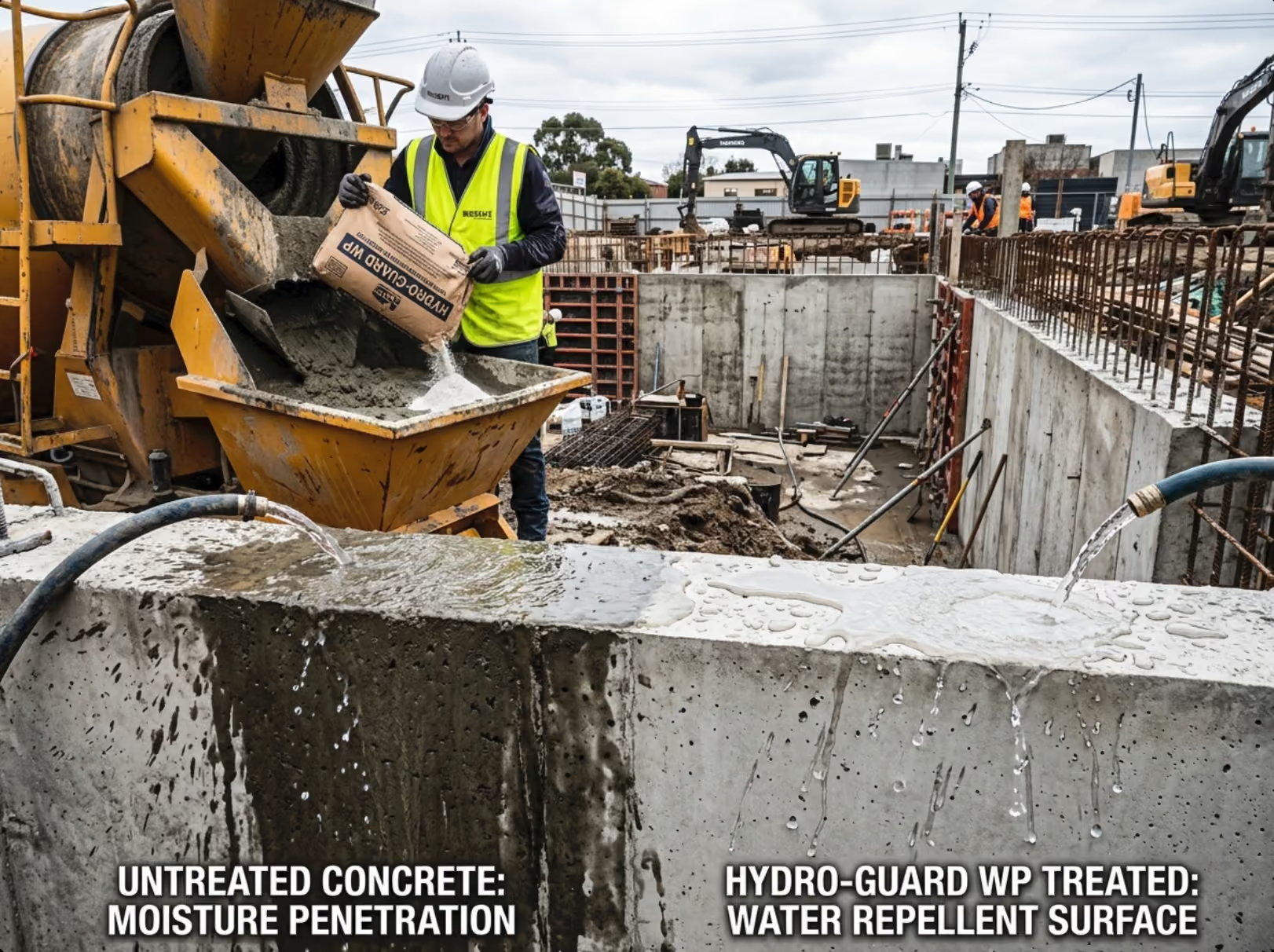
How to Prevent Water Damage in Concrete Structures Before It Starts
It starts quietly.
Moisture enters through pores, cracks, joints, weak spots, or untreated surfaces. Over time, that water can spread deeper into the structure, leading to visible damage, reduced durability, and costly repairs. By the time many contractors or property owners notice the issue, the damage has already been developing for months or years.
That is why the better question is not how to repair water-damaged concrete after the fact. The better question is how to prevent water damage in concrete structures before it starts.
Prevention is almost always more cost-effective than repair, and it starts with understanding why water is such a serious threat to concrete in the first place.
Why Water Is So Damaging to Concrete
Concrete is one of the most widely used construction materials in the world because of its strength and versatility. But concrete also has a weakness: it is porous.
That means water can move into it if the structure is not properly protected. Once moisture enters the system, it can cause or contribute to:
- Surface deterioration
- Cracking and expansion issues
- Internal moisture buildup
- Weakening over time
- Damage to adjacent finishes or coatings
- Recurring maintenance problems
This can affect all kinds of structures including foundations, retaining walls, block walls, stucco applications, bathrooms, swimming pools, tanks, and other concrete-based systems.
Why Reactive Waterproofing Is Not Always Enough
A common mistake in construction is waiting until water shows up before taking waterproofing seriously.
At that point, the project often becomes more complicated. Surfaces may need to be stripped, cracks may need to be opened and repaired, and multiple layers of materials may be required just to address an issue that could have been minimized during the original build.
Reactive repairs can be necessary, but they are not the most efficient first line of defense.
A more strategic approach is to prevent water damage from the beginning by choosing waterproofing products that either become part of the concrete itself or create a strong protective system around it depending on the application.
That is where Rebotec waterproofing solutions become relevant.
A Smarter Way to Prevent Water Damage
Rebotec offers waterproofing solutions designed for concrete and cement-based applications, with a focus on hydrophobic protection, long-term durability, and eco-friendly formulation.
The company’s core message is that water damage should be addressed proactively, not just patched after problems appear. Rebotec products are positioned to help prevent moisture intrusion, extend the life of concrete structures, and reduce long-term maintenance. The brand emphasizes that its products are made from 100% minerals and zero chemicals.
There are several ways this prevention strategy can be applied depending on the situation.
Add Waterproofing Directly Into the Concrete Mix
One of the strongest preventative steps is using an integral waterproofing additive during mixing.
Rebotec Concrete is designed to be added to the cement at the time of mixing so the water-repellent protection is distributed throughout the material. This helps make waterproofing part of the concrete itself instead of relying only on surface treatment.
According to usage guidance, Rebotec Concrete should not be mixed manually. A concrete mixer should be used for better homogenization and even distribution. The product can be added to the aggregates and mixed dry before water is added. The recommended use range is 4% to 18% of cement weight, with 12% recommended for mortars, plastering, stucco, bricks, stones, and blocks. Full curing requires 28 days.
For more technical breakdown, see: How Rebotec Waterproofing Additive Works
Use the Right Product for the Right Surface Condition
Not every waterproofing challenge looks the same.
Some projects benefit from an additive mixed into new concrete. Others require a surface-applied system for repairs or reinforcement zones.
For example, Rebotec Paint is designed for surface-level protection, while Rebotec Flex is positioned for layered waterproofing applications and reinforcement systems.
Application requirements vary depending on the structure:
- Swimming pools and water tanks require multiple protective coats
- Retaining walls and foundations require reinforced application layers
- General surfaces require standard coating systems
This reinforces a key principle: the best prevention plan depends on the application.
Prioritize Surface Preparation
Waterproofing often fails because surface preparation was rushed or skipped.
Proper preparation includes:
- Cleaning the surface thoroughly
- Removing weak or contaminated material
- Opening cracks when necessary
- Allowing sealants to cure before application
These steps directly impact performance.
For proper installation guidance, visit: Waterproofing Application Videos
Think Beyond the Slab
Water damage does not only affect large concrete pours. It can appear in smaller but equally important systems such as:
Foundations, mortars, plastering, stucco, bricks, stones, blocks, bathrooms, pools, tanks, and below-grade walls.
This is why concrete waterproofing fundamentals apply across both structural and finish systems.
Use Educational Resources and Real Demonstrations
Many waterproofing failures happen because teams do not fully understand how systems behave in real conditions.
Rebotec provides demonstration content including hydrophobic testing, crack testing, plastering, tiling, brick laying, and foundation simulations. These resources help contractors and decision-makers understand real-world performance before application.
Explore more in the Rebotec resources library.
Choose Durability, Not Just Short-Term Coverage
Some waterproofing products are chosen because they are quick or familiar. But true cost shows up later if the system fails.
Rebotec focuses on long-term durability and structural protection. This reduces callbacks, maintenance cycles, and long-term repair costs.
Explore full product options here: Rebotec Product Line
Consider Eco-Friendly Construction Priorities
Modern construction increasingly values environmental responsibility.
Rebotec emphasizes 100% mineral-based, zero-chemical formulations. This supports safer jobsite conditions and more sustainable construction practices.
Common Mistakes That Lead to Water Damage
Avoid these frequent issues:
- Assuming concrete is naturally waterproof
- Waiting until damage appears before acting
- Using the wrong waterproofing method
- Skipping surface preparation
- Ignoring curing time
- Improper mixing procedures
- Under-applying protective coatings
Most failures are preventable with correct planning.
Final Thoughts
Water damage in concrete structures is expensive, frustrating, and often preventable.
The most effective strategy is early prevention—choosing the right system, applying it correctly, and ensuring proper preparation from the start.
Rebotec provides a proactive approach through mineral-based waterproofing systems designed for both internal and surface protection, helping extend the lifespan of concrete structures while reducing long-term maintenance.
For project-specific solutions, explore: Rebotec Waterproofing Products
Call to Action
Need help choosing the right waterproofing solution for your project?
Contact Rebotec USA to find the right system for your application or explore product options designed for long-term concrete protection.