Guía de membranas impermeabilizantes para hormigón
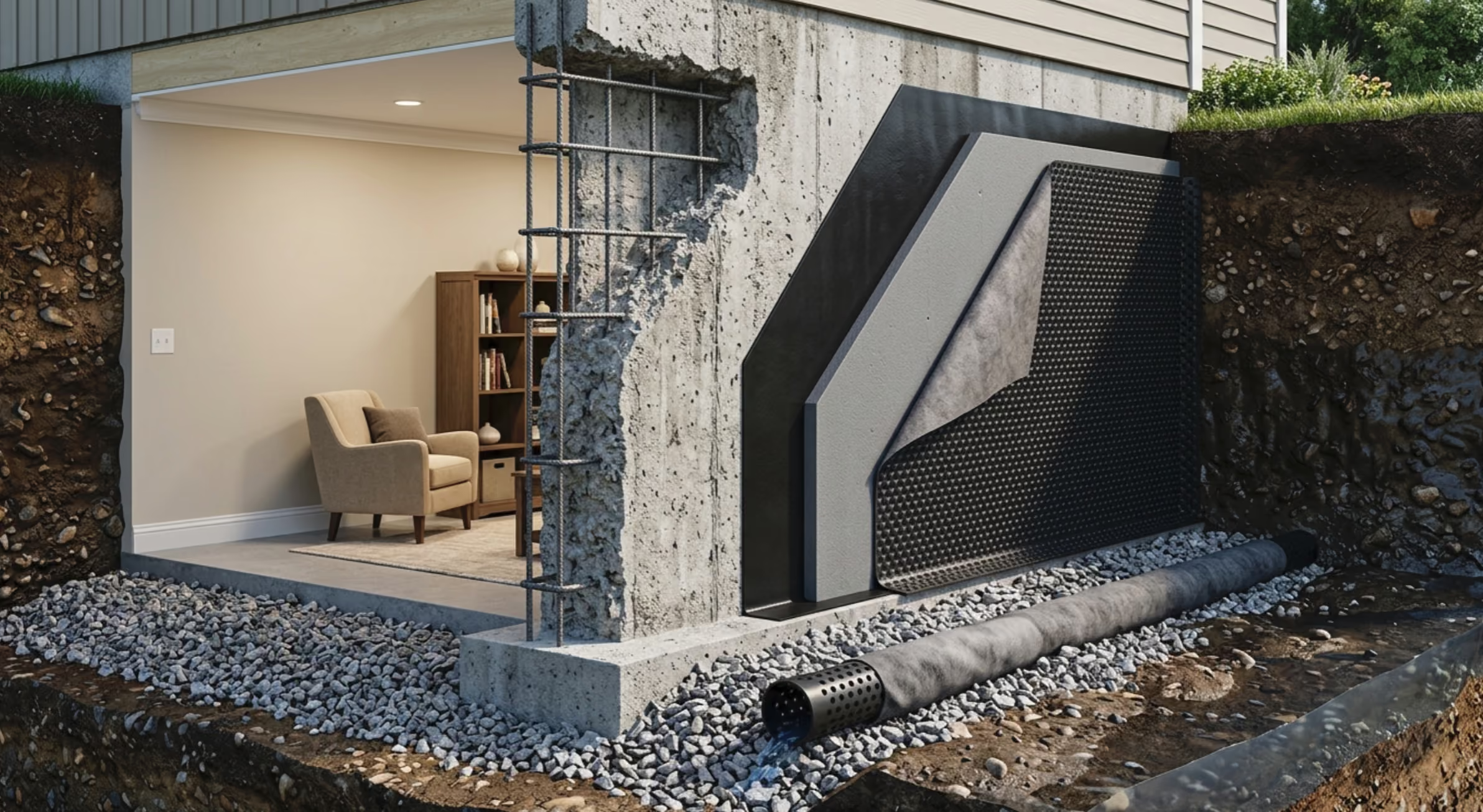
Guía de membranas impermeabilizantes para concreto
El concreto es resistente, duradero y se utiliza en casi todo tipo de construcción. Sin embargo, el concreto sin tratar es poroso. El agua puede penetrar a través de poros microscópicos, canales capilares, juntas de construcción, grietas y áreas dañadas.
Una membrana impermeabilizante para concreto crea una barrera protectora que ayuda a evitar que el agua llegue al concreto o lo atraviese. Las membranas se utilizan comúnmente en cimientos, losas de concreto, techos, balcones, terrazas, muros de contención, sótanos y estructuras bajo el nivel del suelo.
Elegir la membrana impermeabilizante adecuada para el concreto es importante porque cada proyecto enfrenta condiciones diferentes. Un muro de cimentación expuesto a suelo húmedo tiene requisitos distintos a los de un techo de concreto, una losa interior o un balcón expuesto a la lluvia y al tránsito peatonal.
Algunas membranas se instalan en láminas. Otras se aplican mediante rociado, rodillo o brocha sobre el concreto en forma líquida. Algunas se colocan debajo de las losas de concreto antes del vertido, mientras que otras se aplican sobre superficies existentes.
Rebotec USA ofrece productos de impermeabilización y asesoramiento técnico para aplicaciones de concreto comerciales, industriales y residenciales. Para analizar el enfoque de impermeabilización adecuado para su proyecto, llame a Rebotec USA al +1 469-352-3379.
¿Qué es una membrana impermeabilizante para concreto?
Una membrana impermeabilizante para concreto es una barrera continua instalada sobre, debajo o alrededor del concreto para ayudar a detener la intrusión de agua.
La membrana separa el concreto del agua o bloquea el paso de la humedad a través de la superficie protegida. Dependiendo del sistema, también puede cubrir pequeñas grietas, resistir la presión hidrostática y proteger las estructuras bajo el nivel del suelo contra la humedad del terreno.
Una membrana impermeable para concreto puede utilizarse en:
- Muros de cimentación
- Losas de concreto
- Muros y pisos de sótanos
- Cubiertas de techos
- Balcones
- Patios
- Muros de contención
- Estructuras de estacionamiento
- Túneles
- Tanques de agua
- Jardineras
- Edificios comerciales
- Instalaciones industriales
El objetivo de la impermeabilización con membrana para hormigón es crear una barrera continua. Las brechas, secciones dañadas, juntas mal selladas y penetraciones sin tratar pueden convertirse en puntos débiles por donde entra el agua.
Por qué el hormigón puede necesitar una membrana impermeabilizante
Aunque el hormigón parezca sólido, contiene poros que pueden absorber agua. También puede desarrollar grietas debido a la contracción, el movimiento, el asentamiento, los cambios de temperatura o el estrés estructural.
El agua puede entrar en el hormigón a través de:
- Poros superficiales
- Grietas
- Juntas de construcción
- Juntas de dilatación
- Penetraciones de tuberías
- Conexiones entre suelo y pared
- Áreas con nidos de abeja
- Revestimientos dañados
- Juntas mal selladas
Una vez que el agua entra, puede contribuir a:
- Moho y hongos
- Eflorescencia
- Manchas en la superficie
- Desprendimiento de material
- Corrosión del acero de refuerzo
- Descascaramiento de revestimientos
- Daños en el suelo
- Filtraciones interiores
- Reducción de la durabilidad estructural
- Mayores costes de mantenimiento
Una membrana impermeabilizante para hormigón ayuda a aislar la estructura del agua antes de que la humedad llegue al hormigón o al espacio interior.
Tipos principales de membranas impermeabilizantes para hormigón
Las membranas impermeabilizantes se dividen generalmente en dos categorías amplias: membranas en láminas y membranas de aplicación líquida.
Membranas impermeabilizantes en láminas
Las membranas en láminas se fabrican en rollos o paneles. Se instalan sobre el hormigón o el sustrato preparado y se unen por las juntas.
Los materiales comunes para membranas en láminas incluyen:
- Betún modificado
- Asfalto cauchutado
- Materiales termoplásticos
- PVC
- TPO
- EPDM
- Polietileno de alta densidad
- Sistemas a base de bentonita
Los sistemas en lámina ofrecen un espesor de fabricación constante. Esto puede facilitar la verificación de la calidad en comparación con un revestimiento líquido, cuyo espesor depende de la aplicación en obra.
Sin embargo, las membranas en lámina requieren una instalación cuidadosa alrededor de:
- Esquinas
- Juntas
- Penetraciones
- Drenajes
- Cambios de nivel
- Superficies irregulares
- Puntos de terminación
Las juntas deben solaparse, soldarse, encintarse o adherirse correctamente siguiendo las instrucciones del sistema. Una junta defectuosa puede permitir que el agua se filtre detrás de la membrana.
Membrana impermeabilizante líquida para hormigón
Una membrana impermeabilizante líquida para hormigón se aplica en estado líquido y se cura hasta formar una capa protectora continua.
Puede ser:
- Aplicado con rodillo
- Aplicado con brocha
- Aplicado por pulverización
- Aplicado con llana
- Aplicado con rasqueta
Las membranas de aplicación líquida son útiles en formas complejas porque pueden adaptarse a esquinas, penetraciones y superficies irregulares. También pueden crear un revestimiento sin juntas cuando se aplican correctamente.
Los materiales comunes para membranas líquidas incluyen:
- Poliuretano
- Acrílico
- Compuestos cementosos
- Asfalto cauchutado
- Productos a base de silicona
- Poliurea
- Otros revestimientos elastoméricos
La mejor membrana impermeabilizante líquida para hormigón depende de la ubicación, la exposición al agua, el movimiento, el tráfico, el clima y la compatibilidad con otros materiales.
Los sistemas líquidos deben aplicarse con el espesor correcto. Aplicar muy poco producto puede dejar áreas débiles o delgadas. Aplicar demasiado puede causar un curado lento, grietas, burbujas u otros problemas de rendimiento.
Membranas impermeabilizantes cementosas
Los productos impermeabilizantes cementosos se mezclan y aplican sobre hormigón o mampostería. A menudo se utilizan en sótanos, tanques de agua, baños, cimientos y otras superficies a base de cemento.
Estos productos suelen adherirse bien al hormigón porque son compatibles con los materiales cementosos. Algunos son rígidos, mientras que otros están modificados para ofrecer mayor flexibilidad.
Las membranas cementosas pueden ser útiles para:
- Paredes interiores de sótanos
- Tanques de hormigón
- Muros de mampostería
- Cimientos
- Zonas húmedas
- Reparaciones de hormigón existente
Los productos rígidos pueden no ser adecuados cuando se prevén movimientos significativos o cuando se requiere puenteo de fisuras. Las condiciones del proyecto deben evaluarse antes de la selección.
Membranas impermeabilizantes autoadhesivas
Las membranas en láminas autoadhesivas incluyen un adhesivo aplicado de fábrica. Se retira el protector y la membrana se presiona sobre el sustrato preparado.
Estos sistemas son comunes para:
- Muros de cimentación
- Construcciones bajo rasante
- Plazas y terrazas
- Losas de hormigón
- Muros verticales
Pueden reducir la necesidad de adhesivos aplicados en caliente, pero la preparación de la superficie sigue siendo fundamental. El polvo, la humedad, las proyecciones afiladas y el hormigón irregular pueden interferir con la adherencia.
Membranas termofusibles y aplicadas en caliente
Algunas membranas bituminosas se instalan mediante calor o materiales aplicados en caliente. Estos sistemas pueden proporcionar una impermeabilización duradera, pero requieren instaladores capacitados, equipos especializados y procedimientos de seguridad rigurosos.
Se utilizan habitualmente para:
- Cubiertas
- Plazas
- Estructuras de aparcamiento
- Edificios comerciales
- Sistemas de impermeabilización de alta resistencia
Estos sistemas no son adecuados para todos los proyectos ni entornos habitados.
Membrana impermeabilizante para losas de hormigón
Una membrana impermeabilizante para losas de hormigón puede instalarse sobre la losa, debajo de ella o entre capas de hormigón.
La ubicación correcta depende de la fuente de agua y del propósito de la estructura.
Las aplicaciones comunes en losas incluyen:
- Losas de sótano
- Losas a nivel del suelo
- Losas de cubierta
- Balcones
- Plataformas de aparcamiento
- Cuartos de máquinas
- Almacenes
- Losas de hormigón sobre espacios ocupados
Una membrana impermeabilizante para losas de hormigón en construcción puede ayudar a detener:
- Humedad del suelo
- Vapor de agua
- Agua de lluvia
- Filtraciones en áreas ocupadas
- Agua proveniente de zonas húmedas
- Daños por humedad en los suelos
Las membranas bajo losa deben protegerse durante la colocación del refuerzo y el vertido del hormigón. Las perforaciones o los sellados deficientes en las penetraciones pueden reducir su rendimiento.
Las membranas sobre losa pueden requerir protección contra el tránsito, acabados, pavimentos, aislamiento u otros materiales de construcción.
Membrana impermeabilizante para losas de hormigón frente a barrera de vapor
Una membrana impermeabilizante para losas de hormigón y una barrera de vapor están relacionadas, pero no siempre son intercambiables.
Una barrera de vapor está diseñada principalmente para reducir el paso de vapor de agua a través de la losa. Una membrana impermeabilizante puede estar diseñada para detener el agua líquida, resistir la presión y proteger contra la exposición directa.
Un proyecto bajo losa puede requerir:
- Una barrera de vapor
- Una membrana impermeabilizante
- Drenaje
- Placa de protección
- Penetraciones selladas
- Tratamiento adecuado de juntas
El diseñador del proyecto debe determinar qué materiales se requieren según las condiciones del suelo, el nivel freático, la ocupación y los requisitos del suelo.
Membrana impermeabilizante para cimientos de hormigón
Una membrana impermeabilizante para cimientos de hormigón se aplica en el exterior o, en algunos casos, en el interior de los muros de cimentación para ayudar a evitar que la humedad del suelo y el agua subterránea entren en el edificio.
La impermeabilización exterior de los cimientos suele ser preferible porque detiene el agua antes de que llegue al muro.
Un sistema exterior típico puede incluir:
- Muro de cimentación de hormigón preparado
- Imprimación
- Membrana impermeabilizante
- Refuerzo en grietas o transiciones
- Panel de protección
- Malla de drenaje
- Drenaje perimetral
- Relleno nivelado adecuadamente
La elección de una membrana impermeabilizante para cimientos de hormigón debe basarse en:
- Condiciones del agua subterránea
- Presión hidrostática
- Tipo de suelo
- Profundidad de los cimientos
- Clima
- Drenaje
- Movimiento de muros
- Cronograma de construcción
Una membrana no puede solucionar todos los problemas de drenaje. La impermeabilización de cimientos funciona mejor como parte de un sistema integral de gestión de agua.
Impermeabilización por el lado positivo frente al lado negativo
El lado por donde el agua llega primero a la estructura se denomina lado positivo.
En un muro de cimentación, el lado exterior en contacto con el suelo suele ser el lado positivo. Aplicar la membrana allí bloquea el agua antes de que penetre en el hormigón.
La impermeabilización por el lado negativo se instala en la cara opuesta, como el interior de un muro de sótano.
Impermeabilización por el lado positivo
Entre sus beneficios se incluyen:
- Detiene el agua antes de que penetre en el hormigón
- Protege una mayor parte de la estructura
- Reduce el movimiento de humedad interna
- Suele gestionar la presión del agua con mayor eficacia
El principal desafío es el acceso. Una vez realizado el relleno o la construcción, puede resultar difícil llegar al exterior.
Impermeabilización por el lado negativo
Entre sus beneficios se incluyen:
- Se puede instalar desde el interior
- Útil cuando el acceso exterior es imposible
- Puede ayudar a controlar las filtraciones interiores
Sin embargo, el agua aún puede entrar y permanecer dentro del muro de hormigón antes de llegar al tratamiento interior. El producto debe estar diseñado para soportar presión de agua negativa.
Cómo elegir la mejor membrana impermeabilizante
No existe una única membrana ideal para todos los proyectos. La elección correcta depende de la estructura y de su exposición.
Considere los siguientes factores:
Exposición al agua
¿El área está expuesta a lluvia ocasional, suelo húmedo, agua subterránea continua, agua estancada o inmersión total?
La exposición constante y la presión hidrostática requieren una impermeabilización más resistente que la humedad superficial ocasional.
Ubicación
¿La membrana es para una cimentación, losa, techo, balcón, sótano, tanque o muro de contención?
Las distintas ubicaciones requieren diferentes niveles de resistencia al tránsito, rayos UV, suelo, productos químicos y movimiento.
Puenteo de grietas y movimiento
Algunas estructuras experimentan movimientos debido a cambios de temperatura, asentamientos, vibraciones o cargas. Las membranas flexibles pueden puentear pequeñas grietas mejor que los productos rígidos.
Estado de la superficie
El hormigón debe inspeccionarse para detectar:
- Grietas
- Nidos de abeja
- Vacíos
- Proyecciones afiladas
- Polvo
- Aceite
- Revestimientos existentes
- Humedad
- Material débil
Las membranas funcionan mejor cuando se aplican sobre un sustrato debidamente preparado y compatible.
Condiciones de aplicación
La temperatura, la humedad, la lluvia, el viento y la humedad superficial pueden afectar la instalación y el curado. Algunas membranas líquidas no pueden aplicarse sobre hormigón húmedo. Otras están diseñadas para condiciones de humedad específicas.
Tráfico futuro y protección
¿Estará la membrana expuesta al tránsito peatonal, vehículos, relleno, trabajos de construcción, baldosas, adoquines u otro acabado?
Muchas membranas necesitan una capa de protección para evitar perforaciones y abrasión.
Compatibilidad
Las imprimaciones, selladores, paneles de drenaje, aislamientos, adhesivos y capas de acabado deben ser compatibles con la membrana.
Mezclar productos de diferentes sistemas sin aprobación puede provocar problemas de adherencia o químicos.
Pasos comunes para la instalación de membranas impermeabilizantes
Las instrucciones exactas varían, pero muchas instalaciones siguen estos pasos generales:
- Inspeccione el hormigón.
- Repare grietas, huecos y áreas dañadas.
- Elimine la suciedad, el polvo, el aceite y el material suelto.
- Confirme que la superficie cumple con los requisitos de humedad.
- Aplique imprimación si es necesario.
- Refuerce esquinas, juntas, desagües y penetraciones.
- Aplique o instale la membrana.
- Selle las uniones y los puntos de terminación.
- Verifique el espesor o el solapamiento requerido.
- Realice las pruebas o inspecciones cuando se especifique.
- Añada paneles de protección o materiales de drenaje.
- Proteja el sistema durante el resto de la construcción.
Omitir la preparación de la superficie es una de las causas más comunes de fallo de la membrana.
Errores comunes en la impermeabilización de membranas de hormigón
El rendimiento de la impermeabilización depende en gran medida de la calidad de la instalación.
Los errores comunes incluyen:
- Aplicar sobre hormigón sucio o débil
- Ignorar grietas y juntas
- Usar muy poca membrana líquida
- Dejar poros o huecos
- Sellar mal las penetraciones
- No solapar correctamente las juntas de las láminas
- Instalar durante condiciones climáticas inadecuadas
- Relleno sin tablero de protección
- Permitir que otros gremios perforen la membrana
- Uso de selladores o imprimadores incompatibles
- Finalizar la membrana por debajo del nivel de agua previsto
- No probar el sistema terminado
Incluso la mejor membrana puede fallar si los detalles no se instalan correctamente.
Membranas impermeabilizantes frente a impermeabilización integral
Una membrana crea una barrera separada alrededor o sobre el hormigón. La impermeabilización integral actúa dentro del propio hormigón.
El polvo Rebotec Admix se mezcla con el hormigón o mortero para ayudar a crear propiedades hidrofóbicas en todo el material. Una vez curado, se convierte en una parte integral del hormigón en lugar de una capa superficial separada.
Las posibles diferencias incluyen:
Impermeabilización con membrana
- Aplicada sobre o bajo la superficie
- Puede cubrir algunas grietas
- Requiere juntas y terminaciones
- Puede ser vulnerable a perforaciones
- A menudo necesita protección
- Puede utilizarse en hormigón existente
Impermeabilización integral
- Añadida durante la mezcla
- Distribuida por todo el hormigón
- No depende de juntas superficiales
- Ayuda a reducir el movimiento de agua a través del material
- Es muy adecuado para hormigón o mortero nuevo
- Puede combinarse con otros métodos cuando las condiciones del proyecto lo requieran
Un proyecto puede utilizar una membrana, un aditivo impermeabilizante integral o ambos. El mejor enfoque depende del diseño, el nivel de riesgo y la exposición.
Cuándo contactar a un profesional en impermeabilización
La revisión profesional es especialmente importante cuando el proyecto involucra:
- Fugas activas
- Grietas estructurales
- Presión hidrostática
- Cimientos bajo el nivel del suelo
- Espacios ocupados bajo losas
- Tanques de agua o piscinas
- Cubiertas comerciales
- Estructuras de estacionamiento
- Penetraciones complejas
- Exposición industrial
- Proyectos de construcción a gran escala
Las fallas en la impermeabilización pueden ser costosas de reparar una vez que se han instalado los acabados, el relleno o los espacios están ocupados.
Obtenga ayuda para elegir una solución de impermeabilización de hormigón
Rebotec USA ayuda a contratistas, constructores, distribuidores, ingenieros y propietarios a evaluar productos de impermeabilización para aplicaciones de hormigón y mortero.
Tanto si su proyecto implica una cimentación, losa, muro, piscina, depósito, tejado u otra estructura de hormigón, nuestro equipo puede ayudarle a revisar las opciones de productos y los requisitos de aplicación.
Llame a Rebotec USA al +1 469-352-3379 para hablar sobre su proyecto y encontrar el enfoque de impermeabilización a largo plazo adecuado.
Conclusión
Una membrana impermeabilizante para hormigón ayuda a evitar que el agua penetre en cimientos, losas, muros, tejados, balcones y otras estructuras de hormigón. Las opciones más comunes incluyen membranas en láminas, membranas autoadhesivas, revestimientos aplicados en líquido, sistemas cementosos y productos de aplicación en caliente.
La mejor membrana impermeabilizante líquida para hormigón —o el mejor sistema en láminas— depende de la ubicación, la presión del agua, el movimiento, el sustrato, el clima y el tráfico previsto.
Una impermeabilización con membrana de hormigón exitosa requiere algo más que elegir un producto. La preparación de la superficie, el tratamiento de grietas, las juntas, las penetraciones, el drenaje, la protección y la inspección afectan al rendimiento.
Las membranas pueden proporcionar una protección eficaz, pero algunos proyectos también pueden beneficiarse de la impermeabilización integral dentro del propio hormigón. Rebotec USA ofrece productos impermeabilizantes a base de minerales y asesoramiento técnico para la construcción residencial, comercial e industrial.
Llame al +1 469-352-3379 para hablar con Rebotec USA sobre su proyecto de impermeabilización de hormigón.
Preguntas frecuentes sobre membranas impermeabilizantes para hormigón
¿Qué es una membrana impermeabilizante para hormigón?
Una membrana impermeabilizante para hormigón es una barrera continua que se aplica sobre, debajo o alrededor del hormigón para ayudar a evitar que el agua líquida entre o atraviese la estructura.
¿Cuál es la mejor membrana impermeabilizante para hormigón?
La mejor opción depende de la aplicación. Los cimientos, losas, tejados, balcones, depósitos y sótanos pueden requerir diferentes sistemas de membranas en láminas o líquidas.
¿Qué es una membrana impermeabilizante líquida para hormigón?
Es un producto de aplicación líquida que se cura hasta formar una capa impermeable continua. Puede aplicarse con rodillo, brocha, pulverizador o llana sobre una superficie preparada.
¿Cuál es la mejor membrana impermeabilizante líquida para hormigón?
La mejor membrana líquida depende de la exposición al agua, la radiación UV, el tráfico, el movimiento de grietas, la temperatura de aplicación y la compatibilidad con el hormigón y los materiales circundantes.
¿Se puede aplicar una membrana impermeabilizante sobre hormigón existente?
Sí. Muchas membranas líquidas y en láminas pueden instalarse sobre hormigón existente si este se encuentra en buen estado, limpio, correctamente preparado y es compatible con el sistema seleccionado.
¿Dónde se instala una membrana impermeabilizante para losas de hormigón?
Puede instalarse debajo de la losa, sobre ella o entre capas de hormigón. La ubicación depende de si el proyecto requiere protección contra la humedad del suelo, el agua de lluvia, el agua líquida o filtraciones en espacios habitados.
¿Es una membrana impermeabilizante para losas de hormigón lo mismo que una barrera de vapor?
No siempre. Una barrera de vapor controla principalmente el vapor de agua. Una membrana impermeabilizante suele estar diseñada para detener el agua líquida y también puede resistir la presión hidrostática.
¿Qué es una membrana impermeabilizante para cimientos de hormigón?
Es una barrera instalada en los muros de cimentación para ayudar a evitar que la humedad del suelo y el agua subterránea penetren en el hormigón y en el edificio.
¿La impermeabilización de cimientos debe instalarse por dentro o por fuera?
A menudo se prefiere la impermeabilización exterior por el lado positivo, ya que detiene el agua antes de que entre en el muro. Los productos interiores por el lado negativo pueden utilizarse cuando no hay acceso al exterior.
¿Pueden las membranas impermeabilizantes cubrir grietas en el hormigón?
Algunas membranas flexibles pueden puentear pequeñas grietas no estructurales. Las grietas activas o estructurales deben evaluarse y repararse antes de la impermeabilización.
¿Puede perforarse una membrana impermeabilizante?
Sí. Las membranas en láminas y líquidas pueden dañarse por el refuerzo, las herramientas, el relleno, las fijaciones o trabajos de construcción posteriores. Las placas de protección y una inspección cuidadosa ayudan a reducir este riesgo.
¿Se pueden usar membranas impermeabilizantes para hormigón junto con impermeabilización integral?
Sí, cuando los sistemas son compatibles y el diseño del proyecto requiere múltiples capas de protección. Un profesional de la impermeabilización o un representante técnico debe revisar la combinación.
¿Cuánto dura una membrana impermeabilizante para hormigón?
La vida útil depende del producto, la calidad de la instalación, la exposición, la protección, el movimiento, el drenaje y el mantenimiento. Los sistemas correctamente diseñados y protegidos pueden ofrecer un rendimiento a largo plazo.
¿Quién puede ayudarme a elegir un producto impermeabilizante para hormigón?
Rebotec USA puede ayudarle a evaluar opciones de impermeabilización de hormigón a base de minerales y otras alternativas para aplicaciones comerciales, industriales y residenciales. Llame al +1 469-352-3379 para recibir asesoramiento sobre productos.