Cuánto tiempo tardan en secarse el concreto y el sellador de concreto
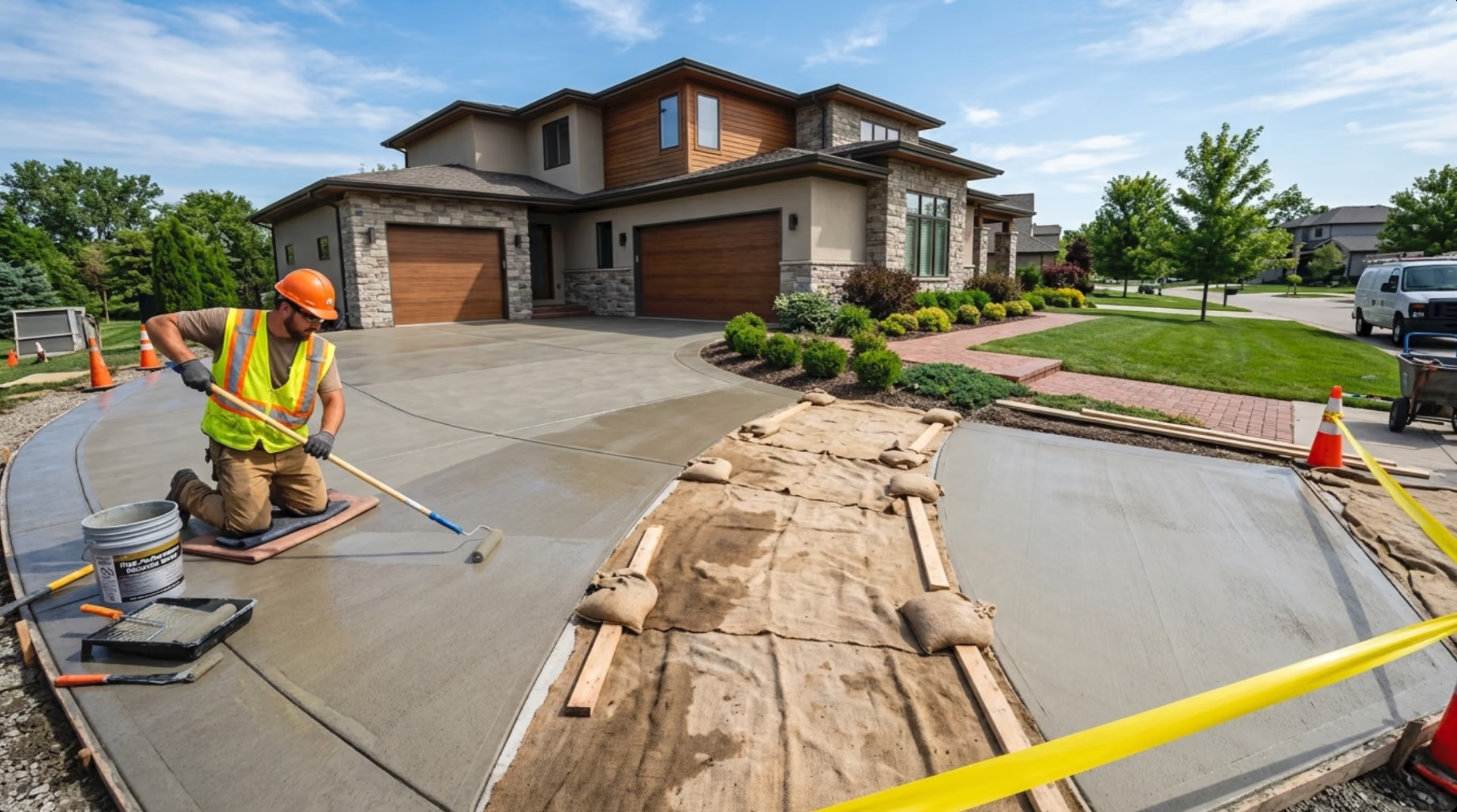
Cuánto tiempo tardan en secarse el hormigón y el sellador de hormigón
Esperar a que el hormigón o el sellador se sequen puede resultar frustrante, especialmente si se avecina lluvia o si necesita volver a utilizar una entrada de garaje, un patio, un suelo o una obra. Sin embargo, apresurarse puede dañar el acabado, debilitar los resultados o impedir que el sellador funcione como debería.
Entonces, ¿cuánto tiempo tarda en secarse el hormigón?
El hormigón fresco suele estar lo suficientemente firme para el tránsito peatonal ligero en unas 24 a 48 horas, pero sigue ganando resistencia y liberando humedad durante mucho más tiempo. Por lo general, se considera que el hormigón ha fraguado sustancialmente después de unos 28 días, aunque el secado puede continuar más allá de ese punto.
El sellador de hormigón sigue un calendario diferente. Dependiendo del producto, el clima, la superficie y el número de capas, un sellador puede sentirse seco en pocas horas, pero aun así necesitar de 24 a 72 horas antes de poder resistir la lluvia, los vehículos, el tráfico intenso o el uso completo.
El tiempo de espera correcto siempre depende del producto y del proyecto específicos. Rebotec USA ayuda a contratistas, constructores, propietarios y profesionales de la construcción a elegir productos de impermeabilización de hormigón para aplicaciones comerciales, industriales y residenciales. Para obtener asesoramiento sobre productos, llame a Rebotec USA al +1 469-352-3379.
Secado del hormigón frente al fraguado del hormigón
Antes de hablar de plazos, es importante entender la diferencia entre secado y fraguado.
El hormigón no se endurece simplemente porque el agua se evapore. El cemento y el agua reaccionan mediante un proceso químico llamado hidratación. Esta reacción une los ingredientes y permite que el hormigón gane resistencia.
El fraguado se refiere a mantener las condiciones de humedad y temperatura necesarias para la hidratación y el desarrollo de la resistencia.
El secado se refiere a la salida del exceso de humedad del hormigón.
Estos procesos pueden ocurrir al mismo tiempo, pero no son lo mismo. El hormigón puede estar lo suficientemente duro como para caminar sobre él y, aun así, contener una cantidad significativa de humedad interna. También puede seguir ganando resistencia mucho después de que la superficie parezca seca.
Esta distinción es importante a la hora de decidir cuándo:
- Caminar sobre el hormigón
- Transitar sobre él
- Aplicar un sellador de concreto
- Instalar el piso
- Pintar la superficie
- Comenzar los trabajos de impermeabilización
- Exponerlo a maquinaria pesada
- Permitir la lluvia o el agua estancada
¿Cuánto tiempo tarda en secar el concreto?
No existe un tiempo de secado único para todos los proyectos de concreto. Una losa de concreto típica puede seguir un cronograma general como este:
- Después de varias horas: La superficie comienza a fraguar y ya no debe trabajarse, a menos que el proceso de instalación lo requiera.
- Después de 24 a 48 horas: Muchas losas pueden soportar tráfico peatonal ligero.
- Después de aproximadamente siete días: El concreto ha alcanzado una parte significativa de su resistencia esperada, pero aún no está completamente curado.
- Después de aproximadamente 28 días: Por lo general, se considera que el concreto está sustancialmente curado para muchas decisiones de construcción y aplicación de productos.
- Después de 28 días: El secado interno puede continuar durante semanas o meses, especialmente en losas gruesas o en condiciones de humedad.
Cuando alguien pregunta: “¿Cuánto tiempo tarda en secar el concreto?”, en realidad puede estar haciendo varias preguntas diferentes.
La respuesta depende de lo que se quiera hacer a continuación. Caminar sobre una losa, conducir sobre ella, sellarla o instalar suelos sensibles a la humedad requieren condiciones diferentes.
¿Qué afecta al tiempo de secado del hormigón?
El tiempo de secado del hormigón depende de algo más que del número de días transcurridos desde su vertido.
Entre los factores importantes se incluyen:
Temperatura
Las temperaturas moderadas suelen favorecer un fraguado y secado más predecibles. El clima frío ralentiza la hidratación y el movimiento de la humedad. El calor extremo puede hacer que la superficie pierda humedad demasiado rápido, lo que aumenta el riesgo de grietas o de un fraguado deficiente.
Humedad
La humedad alta ralentiza la evaporación. El hormigón puede permanecer húmedo durante más tiempo cuando el aire circundante ya contiene una gran cantidad de humedad.
La baja humedad favorece una evaporación más rápida, pero un secado demasiado veloz también puede ser perjudicial para el hormigón fresco si no se siguen las prácticas de curado adecuadas.
Grosor del hormigón
Una losa gruesa suele tardar más en liberar la humedad interna que una sección delgada. Incluso cuando la superficie parece seca, puede quedar humedad en el interior.
Relación agua-cemento
El hormigón elaborado con más agua de mezcla puede tardar más en secarse y contener más espacios capilares tras el fraguado. Un diseño de mezcla adecuado ayuda a controlar la resistencia, la trabajabilidad y el comportamiento frente a la humedad.
Circulación del aire
La ventilación y el flujo de aire ayudan a que la humedad abandone la superficie. Los sótanos cerrados, los almacenes y las losas de interior pueden secarse más lentamente que el hormigón en exteriores.
Drenaje y condiciones del terreno
El hormigón colocado sobre suelo húmedo o en una zona sin una barrera de vapor eficaz puede seguir recibiendo humedad desde abajo.
Método de curado
El curado húmedo, las mantas de curado, las láminas de plástico y los compuestos de curado pueden retener intencionadamente la humedad en el hormigón durante el desarrollo inicial de la resistencia. Esto es beneficioso para el curado, aunque la superficie tarde más en parecer seca.
¿Cuánto tiempo necesita secarse el hormigón antes de que llueva?
El hormigón fresco debe protegerse de la lluvia durante su periodo inicial de fraguado. La lluvia que alcanza la superficie demasiado pronto puede arrastrar la pasta de cemento, dejar marcas, debilitar la capa superior o dañar el acabado.
El mayor riesgo se produce durante las primeras horas tras el vertido, antes de que la superficie haya fraguado.
En condiciones normales, el hormigón que ha tenido varias horas para fraguar puede soportar mejor la lluvia ligera que el hormigón recién vertido. Sin embargo, el momento exacto depende de la temperatura, la mezcla, el acabado y las condiciones meteorológicas.
Cuando se prevea lluvia:
- Proteja la zona con una cubierta temporal siempre que sea posible.
- Evite que la cubierta repose directamente sobre la superficie sin terminar.
- Evite que el agua de escorrentía se acumule sobre la losa.
- No realice trabajos de acabado mientras haya agua de lluvia sobre el hormigón.
- Siga las instrucciones específicas del proyecto proporcionadas por el proveedor de hormigón.
La pregunta "¿Cuánto tiempo debe secarse el hormigón antes de que llueva?" no tiene una respuesta universal. El enfoque más seguro es mantener la lluvia alejada hasta que el hormigón haya terminado de fraguar y el instalador confirme que la superficie es estable.
¿Qué significa regar el hormigón?
El término regar el hormigón puede sonar a añadir agua no deseada, pero un riego controlado puede formar parte de un curado adecuado.
El hormigón fresco necesita humedad para su hidratación. Si la superficie se seca demasiado rápido, el hormigón puede no desarrollar la resistencia o durabilidad previstas. Los contratistas pueden utilizar agua, cubiertas húmedas, láminas de plástico o compuestos de curado para ayudar a retener la humedad.
Regar el hormigón no significa inundarlo ni rociar una superficie nueva y delicada con alta presión. Significa mantener una humedad controlada una vez que el hormigón ha fraguado lo suficiente como para evitar daños superficiales.
Los métodos de curado más comunes incluyen:
- Nebulización ligera a intervalos adecuados
- Arpillera húmeda o mantas de curado
- Láminas de plástico
- Compuestos de curado
- Inundación en aplicaciones adecuadas
El método correcto depende del proyecto, la mezcla, el clima y las especificaciones.
¿Cuándo se puede sellar el concreto?
No se debe aplicar un sellador de concreto automáticamente tan pronto como la superficie se sienta dura.
Muchos selladores tradicionales requieren que el concreto nuevo cure durante aproximadamente 28 días antes de su aplicación. Esto permite que la hidratación progrese y que el exceso de humedad salga de la losa. Sin embargo, ciertos productos de curado y sellado pueden estar diseñados para una aplicación más temprana.
Siga siempre las instrucciones del fabricante del sellador.
Aplicar un sellador demasiado pronto puede causar:
- Opacidad
- Mala adherencia
- Burbujeo
- Ampollas
- Desprendimiento
- Humedad atrapada
- Apariencia desigual
- Reducción del rendimiento del producto
Antes de sellar concreto existente, la superficie también debe estar limpia y preparada adecuadamente. La suciedad, el aceite, el polvo, los recubrimientos antiguos y la humedad pueden interferir con la aplicación.
¿Cuánto tarda en secar el sellador de concreto?
¿Cuánto tarda en secar el sellador de concreto? La respuesta general es desde unas pocas horas hasta varios días, dependiendo de lo que signifique "seco".
Un sellador puede pasar por varias etapas:
- Seco al tacto: La superficie ya no se siente húmeda ni pegajosa.
- Listo para otra capa: Se puede aplicar la siguiente capa.
- Listo para tránsito peatonal ligero: Se puede caminar sobre la superficie con precaución.
- Listo para vehículos o tránsito pesado: El recubrimiento ha curado lo suficiente para soportar mayor presión.
- Curado completo: El sellador ha alcanzado su nivel de rendimiento previsto.
Un cronograma general común es:
- Seco al tacto en unas pocas horas
- Tránsito peatonal ligero después de aproximadamente 12 a 24 horas
- Tránsito vehicular después de aproximadamente 48 a 72 horas
- Curado completo después de varios días
Estos son solo rangos generales. Algunos selladores penetrantes secan más rápido, mientras que los recubrimientos más gruesos de poliuretano, acrílico, epoxi o impermeabilizantes pueden requerir más tiempo.
La etiqueta del producto es la fuente más confiable para conocer el tiempo de secado y curado requerido.
¿Cuánto tarda en secar el sellador de concreto?
Los términos “sellador de concreto” y “sellante de concreto” a menudo se usan indistintamente, pero pueden referirse a productos diferentes.
Un sellador de concreto generalmente protege una superficie más amplia. Un sellante también puede referirse al material utilizado en grietas, juntas o huecos.
El tiempo de secado del sellador de concreto depende de:
- La composición química del producto
- El espesor de la aplicación
- La profundidad de la junta
- La temperatura
- La humedad
- La humedad de la superficie
- La ventilación
- Si se aplicó una o varias capas
Un producto penetrante de capa fina puede secarse con relativa rapidez. Un sellador de juntas grueso o un revestimiento impermeable puede requerir mucho más tiempo antes de exponerse al agua o al movimiento.
¿Cuánto tiempo debe secarse el sellador de concreto antes de que llueva?
La lluvia puede dañar el sellador que no se ha secado o curado lo suficiente. Puede dejar manchas, crear opacidad, arrastrar parte del producto o impedir una adherencia adecuada.
Muchos productos necesitan al menos varias horas de secado antes de la lluvia. Otros pueden requerir de 24 a 48 horas completas de tiempo seco. Algunos productos especializados pueden tener requisitos más cortos o más largos.
Antes de sellar concreto en exteriores:
- Lea las instrucciones del fabricante.
- Consulte el pronóstico del tiempo por horas.
- Deje tiempo adicional si el clima es frío o húmedo.
- Evite la aplicación cuando se espere lluvia, rocío o riego.
- Apague los aspersores cercanos al área de trabajo.
- Asegúrese de que el agua de escorrentía no pueda cruzar la superficie sellada.
Al consultar cuánto tiempo debe secarse el sellador de concreto antes de que llueva, utilice el tiempo de resistencia a la lluvia o exposición al agua indicado por el producto, no solo el tiempo en que la superficie se siente seca al tacto.
¿Cuánto tiempo después de sellar el concreto puede llover?
El tiempo que debe pasar después de sellar el concreto antes de que llueva depende del tipo de sellador.
Un margen de planificación general es dejar pasar al menos 24 horas sin lluvia, pero algunos productos requieren 48 horas o más. Siga siempre las instrucciones del fabricante si indican un periodo diferente.
Los factores que pueden aumentar el tiempo necesario incluyen:
- Clima frío
- Alta humedad
- Aplicación abundante
- Capas múltiples
- Poca ventilación
- Superficies a la sombra
- Concreto denso o poco absorbente
Incluso si la superficie parece seca, es posible que el sellador aún se esté curando por debajo.
Si cae lluvia inesperada sobre una superficie recién sellada, no aplique otra capa de inmediato. Deje que la superficie se seque, inspecciónela en busca de blanqueamiento, manchas, vetas o problemas de adherencia, y siga las recomendaciones de reparación del fabricante del producto.
¿Cuánto tiempo tarda en secarse el sellador para entradas de concreto?
Un sellador para entradas debe soportar el peso y los neumáticos de los vehículos, el calor, la suciedad y la intemperie. Debido a estas exigencias, requiere más tiempo que una superficie que solo recibirá tráfico peatonal ligero.
Muchos selladores para entradas requieren:
- Varias horas antes de estar secos al tacto
- Alrededor de 24 horas antes de permitir tráfico peatonal ligero
- Aproximadamente de 48 a 72 horas antes de que los vehículos puedan volver a circular
Algunos productos requieren más tiempo.
Estacionar sobre una entrada de vehículos demasiado pronto puede causar marcas de neumáticos, descamación, hendiduras, decoloración o daños al sellador.
Antes de volver a usar el vehículo:
- Consulte el tiempo de espera para tráfico vehicular recomendado por el fabricante.
- Añada más tiempo si el clima es frío o húmedo.
- Confirme que la superficie no esté pegajosa.
- Mantenga los rociadores y la lluvia alejados durante el proceso de curado.
- Evite girar los neumáticos del vehículo mientras el coche esté detenido durante los primeros días.
Cómo influye el clima en el tiempo de secado del sellador
El clima puede afectar significativamente el secado.
Clima cálido
Las altas temperaturas pueden hacer que la superficie parezca secarse rápidamente. Sin embargo, aplicar sellador sobre concreto demasiado caliente puede causar burbujas, absorción desigual, marcas de solapamiento o la formación prematura de una película.
Clima frío
Las bajas temperaturas ralentizan la evaporación y el curado. Algunos selladores no deben aplicarse por debajo de una temperatura mínima establecida.
Alta humedad
La alta humedad puede prolongar los tiempos de secado y curado. A la humedad le cuesta más salir del producto cuando el aire ya está saturado.
Viento
Una brisa ligera puede favorecer la evaporación, pero el viento fuerte puede hacer que los productos se sequen demasiado rápido y generen resultados desiguales.
Rocío
Incluso sin lluvia, el rocío nocturno puede afectar al sellador fresco. Las aplicaciones en exteriores deben programarse de modo que el producto tenga tiempo suficiente para volverse resistente al agua antes de que aparezca la humedad del atardecer.
Cómo ayudar a que el sellador de concreto seque correctamente
No se puede forzar a todos los selladores a secar más rápido, pero sí se pueden crear mejores condiciones.
Antes de aplicar:
- Confirme que el concreto esté suficientemente curado.
- Limpie la superficie a fondo.
- Deje secar el concreto después de lavarlo.
- Repare grietas y áreas dañadas cuando sea necesario.
- Elimine los recubrimientos antiguos incompatibles.
- Verifique la temperatura y la humedad.
- Revise el pronóstico del tiempo.
- Lea las instrucciones completas del producto.
Durante la aplicación:
- Aplique la cantidad recomendada.
- Evite la formación de charcos gruesos.
- Mantenga una aplicación uniforme.
- Respete el tiempo de espera para aplicar una segunda capa.
- Mantenga alejados a personas, mascotas, equipos y vehículos.
Después de la aplicación:
- Proteja la superficie de la lluvia y el riego.
- Proporcione ventilación en aplicaciones de interiores.
- No cubra la superficie a menos que se le indique.
- Espere el tiempo completo indicado antes de permitir el tránsito o la exposición al agua.
¿Funciona Rebotec como un sellador de superficies convencional?
No todos los productos impermeabilizantes para concreto funcionan como un sellador de superficies convencional.
Rebotec USA ofrece productos impermeabilizantes a base de minerales diseñados para aplicaciones de concreto y mortero. El polvo aditivo Rebotec se mezcla con el concreto o mortero en lugar de aplicarse simplemente como una película superficial. Una vez incorporado al material y fraguado, se convierte en una parte integral del concreto o mortero.
La guía del producto Rebotec indica que el aditivo tarda aproximadamente 28 días en fraguar dentro del concreto o mortero. Los requisitos del proyecto, la dosificación, la mezcla, el curado y la exposición ambiental deben revisarse antes de su uso.
Rebotec también ofrece productos de aplicación superficial para diferentes necesidades de impermeabilización. Las instrucciones correctas de secado y curado dependen del producto Rebotec específico seleccionado.
Obtenga ayuda para elegir un producto impermeabilizante para concreto
Los tiempos de secado y curado afectan el rendimiento del producto. Aplicar el producto incorrecto, sellar el concreto demasiado pronto o exponer una superficie a la lluvia antes de tiempo puede generar reparaciones innecesarias.
Rebotec USA puede ayudar a contratistas, constructores, distribuidores y propietarios a evaluar productos impermeabilizantes a base de minerales para proyectos comerciales, industriales y residenciales.
Llame a Rebotec USA al +1 469-352-3379 para obtener orientación sobre productos, información de aplicación y ayuda para seleccionar la solución de impermeabilización adecuada.
Conclusión
El concreto puede estar lo suficientemente firme para el tránsito peatonal en un plazo de 24 a 48 horas, pero el curado y el secado interno llevan mucho más tiempo. Muchos proyectos utilizan los 28 días como un hito de curado importante, aunque el secado real puede continuar más allá de ese punto.
El sellador de concreto puede sentirse seco en unas pocas horas, pero a menudo necesita de 24 a 72 horas antes de exponerse a la lluvia, al uso intensivo o al tránsito vehicular. El cronograma exacto depende del producto, la temperatura, la humedad, el flujo de aire, la preparación de la superficie y el espesor de la aplicación.
El enfoque más seguro es seguir las instrucciones del proveedor de concreto y del fabricante del sellador. No confíe únicamente en el aspecto o la sensación de sequedad de la superficie.
Para obtener ayuda al elegir una solución de impermeabilización de concreto a base de minerales, comuníquese con Rebotec USA al +1 469-352-3379.
Preguntas frecuentes sobre el secado del hormigón y los selladores
¿Cuánto tarda en secar el hormigón?
El hormigón puede estar lo suficientemente firme para el tránsito peatonal ligero en 24 a 48 horas, pero continúa fraguando y liberando humedad durante semanas. Los 28 días son un hito común de curado, aunque el secado interno completo puede llevar más tiempo.
¿Cuánto tiempo debe secar el hormigón antes de que llueva?
El hormigón fresco debe protegerse de la lluvia durante su periodo inicial de fraguado. La lluvia durante las primeras horas puede dañar el acabado. El tiempo exacto de seguridad depende de la mezcla, la temperatura, el acabado y las condiciones del proyecto.
¿Cuánto tarda en secar el sellador de hormigón?
Muchos selladores de hormigón se secan al tacto en pocas horas. Se puede permitir el tránsito peatonal ligero después de unas 12 a 24 horas, mientras que el tránsito vehicular puede requerir de 48 a 72 horas. Siempre deben seguirse las instrucciones del producto.
¿Cuánto tiempo debe secar el sellador de hormigón antes de la lluvia?
Algunos selladores necesitan varias horas de secado, mientras que otros requieren de 24 a 48 horas o más antes de la lluvia. Consulte las instrucciones específicas del producto sobre la exposición al agua.
¿Cuánto tiempo necesita secar el sellador de hormigón antes de que llueva?
Un margen de secado mínimo de 24 horas es un objetivo común de planificación, pero el tiempo requerido varía según el producto. El clima frío, la humedad alta y las aplicaciones gruesas pueden prolongar el periodo de secado necesario.
¿Cuánto tiempo después de sellar el hormigón puede llover?
La respuesta depende del sellador. Algunos productos pueden tolerar la lluvia después de varias horas, mientras que otros necesitan uno o más días completos. Siga el tiempo de resistencia a la lluvia indicado por el fabricante.
¿Cuánto tarda en secar el sellador para hormigón?
El sellador para hormigón puede tardar unas horas en secarse al tacto y varios días en curarse por completo. Los selladores de juntas gruesos y los revestimientos impermeables pueden requerir más tiempo que los selladores penetrantes delgados.
¿Cuánto tarda en secar el sellador para entradas de garaje de hormigón?
Muchos selladores para entradas de garaje requieren aproximadamente 24 horas antes del tránsito peatonal y de 48 a 72 horas antes del tránsito vehicular. El clima y el tipo de producto pueden aumentar este tiempo.
¿Regar el hormigón ayuda a su curado?
El riego controlado puede ayudar a que el hormigón fresco retenga la humedad necesaria para la hidratación. Debe realizarse utilizando un método de curado adecuado y solo después de que la superficie haya fraguado lo suficiente para evitar daños.
¿Se puede sellar el hormigón antes de los 28 días?
Algunos productos especializados permiten una aplicación más temprana, pero muchos selladores convencionales requieren que el concreto cure durante aproximadamente 28 días. Siga siempre las instrucciones del fabricante del producto.
¿Qué sucede si llueve sobre el sellador de concreto húmedo?
La lluvia puede causar manchas blancas, opacidad, vetas, una adhesión débil o la pérdida parcial del producto. Deje que la superficie se seque y siga las instrucciones de reparación del fabricante antes de aplicar otra capa.
¿Puede un ventilador hacer que el sellador de concreto para interiores se seque más rápido?
La ventilación puede favorecer el secado, pero un flujo de aire excesivo puede hacer que algunos productos curen de forma desigual. Utilice la ventilación de acuerdo con las instrucciones del producto y evite intentar forzar el proceso de secado.
¿Quién puede ayudarme a elegir el producto impermeabilizante para concreto adecuado?
Rebotec USA puede ayudarle a evaluar productos impermeabilizantes para aplicaciones de concreto y mortero. Llame al +1 469-352-3379 para obtener orientación sobre productos y aplicaciones.