Is Concrete Waterproof or Porous?
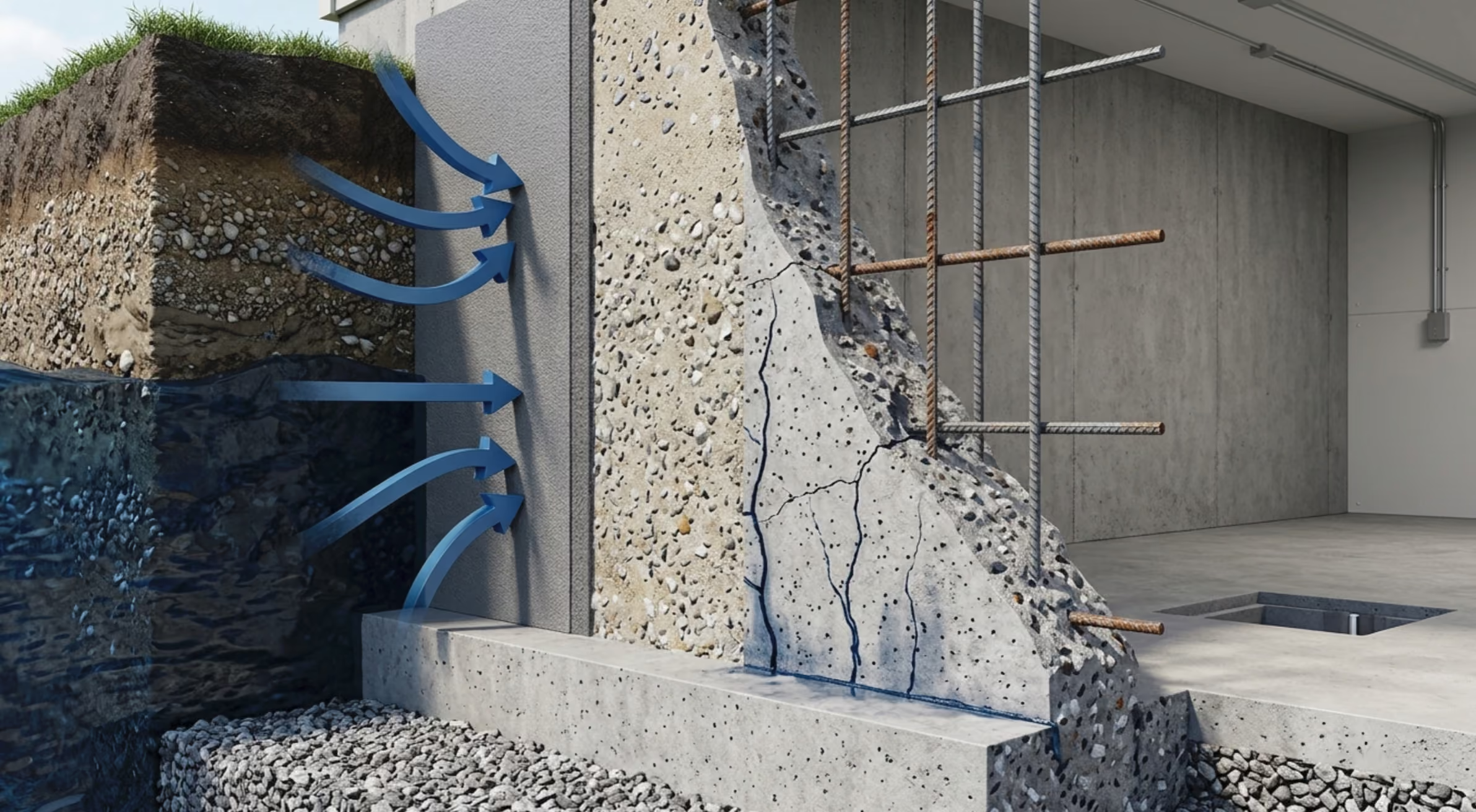
Is Concrete Waterproof or Porous?
Concrete is known for being strong, durable, and able to support massive structures. It is used in foundations, basements, bridges, tunnels, roads, swimming pools, commercial buildings, and homes. Because concrete feels hard and solid, many people assume it must also be waterproof.
But is concrete waterproof?
No. Standard untreated concrete is generally porous and can absorb water. Even when concrete looks dense and completely solid, it contains tiny pores, capillaries, and small pathways that can allow moisture to enter and move through the material.
This does not mean every concrete surface will immediately leak. The amount of water that concrete absorbs depends on the mix design, curing process, density, cracks, water pressure, environmental conditions, and whether the concrete has been treated with a waterproofing product.
Understanding concrete water absorption is important because repeated moisture exposure can cause staining, mold, spalling, corrosion of reinforcement, and long-term structural damage.
Rebotec USA provides mineral-based waterproofing solutions designed to help make concrete hydrophobic and more resistant to water penetration. For product guidance, call Rebotec USA at +1 469-352-3379.
Is Concrete Porous?
Yes, concrete is porous.
Concrete is made by combining cement, water, sand, and aggregates such as gravel or crushed stone. As the mixture cures, the cement and water react and bind the materials together. However, the finished concrete still contains small openings.
These openings may include:
- Microscopic pores
- Capillary channels
- Small air voids
- Gaps around aggregates
- Shrinkage cracks
- Construction joints
- Larger cracks caused by movement or damage
These spaces make concrete absorbent. Water can enter the pores at the surface and move farther into the material.
When people ask, “Is concrete porous or nonporous?” or “Is concrete porous or non porous?” the most accurate answer is that ordinary concrete is porous, although the level of porosity can vary significantly.
Dense, well-designed concrete may absorb less water than poorly mixed or improperly cured concrete. However, even high-quality concrete is not automatically waterproof.
Does Concrete Absorb Water?
Yes, concrete can absorb water.
Concrete water absorption happens when moisture enters the pores and capillaries in the material. The concrete may pull in water when exposed to rain, wet soil, standing water, humidity, leaks, or groundwater.
How quickly the concrete absorbs water depends on several factors:
- The amount of water used in the original mix
- The quality of the concrete mix
- How well the concrete was compacted
- Whether it cured correctly
- The number and size of its pores
- Existing cracks or damage
- The amount of water pressure
- Whether a sealer or waterproofing additive was used
A concrete surface may appear dry while still containing moisture inside. Concrete can also absorb water through one side and release vapor through another.
That is why damp basement walls, peeling floor coatings, surface stains, and musty odors can appear even when there is no obvious standing water.
Does Concrete Absorb Water When Dry?
Yes. Dry concrete can absorb water when it is exposed to moisture.
In fact, very dry, unsealed concrete may quickly pull water into its surface pores. This is similar to the way a dry sponge absorbs water, although concrete absorbs it more slowly.
Concrete may absorb water from:
- Rain
- Wet soil
- Plumbing leaks
- Groundwater
- Condensation
- Flooding
- Pressure washing
- Pools or water tanks
- Indoor cleaning
- Irrigation and landscaping
Once water enters the concrete, it can remain inside for a long time. The surface may dry first while moisture stays trapped deeper in the material.
This is one reason concrete needs time to dry before paint, flooring, coatings, or sealers are installed. Applying a coating over damp concrete can trap moisture and lead to bubbling, peeling, or bond failure.
Is Cement Porous?
Yes, cured cement-based materials are porous.
Cement is one ingredient used to make concrete. When cement is mixed with water, it forms a paste that binds sand and aggregates together. As the cement paste cures, it develops a network of very small pores.
People often use the words “cement” and “concrete” interchangeably, but they are not the same:
- Cement is the binding ingredient.
- Concrete is the finished mixture of cement, water, sand, and aggregate.
- Mortar usually contains cement, water, and sand.
Cement water absorption can affect mortar, grout, stucco, and other cementitious products—not just concrete.
Therefore, the questions “Does cement absorb water?” and “Is cement porous?” generally have the same answer: yes, cured cement-based materials can absorb moisture unless they are properly designed or treated for water resistance.
How Porous Is Concrete?
How porous concrete is depends on how it was made and installed.
The water-to-cement ratio is one of the most important factors. A mix with too much water can leave behind more capillary spaces after curing. This usually creates more permeable and absorbent concrete.
Other factors include:
- Cement type
- Aggregate size
- Admixtures
- Mixing quality
- Air content
- Compaction
- Finishing
- Curing conditions
- Temperature
- Age
- Cracks and surface damage
Well-designed concrete with proper curing can be relatively dense. Poorly mixed or damaged concrete can be much more absorbent.
However, dense concrete and waterproof concrete are not automatically the same thing. A dense surface may slow water movement but still allow moisture to enter under long-term exposure or pressure.
Is Concrete Permeable?
Concrete can be permeable.
Porosity and permeability are related, but they are not exactly the same.
Porosity refers to how many voids or openings exist inside the concrete. Permeability refers to how easily water or another liquid can travel through connected openings.
Concrete may contain pores that are not fully connected. In that case, it can be porous but have lower permeability. If many pores and cracks connect, water can move through the concrete more easily.
Permeability becomes especially important in:
- Basements
- Foundations
- Retaining walls
- Underground structures
- Tunnels
- Dams
- Swimming pools
- Water tanks
- Roof decks
- Concrete exposed to groundwater
Reducing permeability helps limit the movement of water through a concrete structure.
Can Water Seep Through Concrete?
Yes, water can seep through concrete.
Water may move through pores, capillaries, cracks, joints, or damaged sections. In below-grade structures, pressure from water in the surrounding soil can push moisture through concrete walls and floors.
Common signs of water seepage include:
- Damp spots
- Dark surface patches
- White mineral deposits
- Peeling paint
- Musty odors
- Mold growth
- Water beads on walls
- Wet floor edges
- Rust stains
- Crumbling or flaking surfaces
Water often follows the easiest path. A concrete wall may be relatively dense, but water can still enter through a construction joint, crack, pipe penetration, or poorly sealed connection.
Treating the concrete itself is important, but visible cracks, joints, drainage problems, and active leaks may also need to be repaired.
Why Porous Concrete Can Become a Problem
Concrete porosity is not always an immediate failure. Many untreated concrete structures remain in service for years. The problem develops when repeated or constant water exposure begins damaging the material or the structure around it.
Moisture can contribute to:
- Spalling and surface deterioration
- Mold and mildew
- Corrosion of reinforcing steel
- Efflorescence
- Freeze-thaw damage
- Peeling paint and coatings
- Flooring failures
- Indoor humidity
- Concrete staining
- Reduced structural durability
When reinforcement rusts, the steel expands. That expansion can place pressure on the surrounding concrete and cause it to crack or break away.
Water can also carry salts and chemicals into the concrete. This can increase deterioration in coastal, industrial, or high-exposure environments.
Is Concrete Nonporous After It Cures?
No. Curing makes concrete stronger, but it does not automatically make it nonporous.
Concrete hardens through a chemical reaction called hydration. Proper curing helps the cement paste develop strength and can reduce excessive porosity. However, the cured concrete still contains microscopic voids.
A smooth surface also does not mean the concrete is nonporous. Polished or tightly finished concrete may look sealed while still absorbing water.
Concrete can be made more water resistant through:
- Better mix design
- Lower water-to-cement ratio
- Proper consolidation
- Controlled curing
- Waterproofing admixtures
- Penetrating treatments
- Surface coatings
- Membranes
- Joint and crack repair
The right method depends on whether the concrete is new or existing and how much water exposure it will face.
Water-Resistant Concrete vs Waterproof Concrete
Water-resistant concrete slows water absorption. Waterproof concrete is designed to prevent water penetration under the conditions expected for the project.
These terms should not always be treated as identical.
A surface sealer may make concrete more water resistant against rain or occasional spills. However, that same treatment may not stop water under hydrostatic pressure or continuous submersion.
The required solution depends on the application:
- A driveway may need surface water repellency.
- A basement wall may need protection against groundwater.
- A swimming pool must handle continuous water exposure.
- A water tank must prevent leakage.
- A commercial foundation may need long-term structural waterproofing.
- An underground structure may need protection from both water and soil conditions.
For high-risk applications, waterproofing should be planned as part of the complete concrete system.
Ways to Reduce Concrete Water Absorption
Several methods can reduce the amount of water concrete absorbs.
Waterproofing Admixtures
Admixtures are added during concrete or mortar mixing. They become distributed throughout the material instead of only being applied to the surface.
Rebotec Admix Powder is a mineral-based product designed to make concrete or mortar hydrophobic. Because it is mixed into the material, the waterproofing protection becomes an integral part of the concrete after curing.
This approach may be useful for new construction, foundations, pools, water tanks, underground structures, industrial projects, and other applications where long-term protection is needed.
Penetrating Sealers
Penetrating sealers soak into existing concrete and help repel water within the treated surface layer. They may be appropriate for driveways, patios, walls, walkways, and masonry.
Surface Coatings and Paint
Waterproof coatings create a protective layer on the surface. They may be used on walls, floors, basements, and other existing concrete.
Surface preparation is important. Dirt, old paint, moisture, cracks, or loose material can prevent proper bonding.
Waterproofing Membranes
Membranes create a separate barrier between the concrete and water. They are commonly used on foundations, roofs, decks, and below-grade walls.
Membranes can be effective, but they must be installed correctly and protected from punctures, seams, and damage.
Crack and Joint Repairs
Even high-quality waterproofing cannot fully compensate for untreated structural cracks, failed joints, or open penetrations. These areas should be inspected and repaired as part of the waterproofing plan.
How Rebotec Helps Protect Porous Concrete
Rebotec USA provides mineral-based waterproofing products for concrete and mortar applications.
Rebotec Admix Powder is mixed directly into concrete or mortar. It helps create hydrophobic properties throughout the material, reducing the pathways water normally uses to enter.
Rebotec products may be used in commercial, industrial, and residential applications, including:
- Foundations
- Basements
- Exterior walls
- Swimming pools
- Water tanks
- Tunnels
- Bridges
- Dams
- Underground structures
- Concrete repairs
- Mortar applications
The right product and dosage depend on the project, environmental conditions, and level of moisture exposure.
Get Help Making Concrete More Water Resistant
If you are working with porous concrete, water seepage, or a project that requires long-term moisture protection, Rebotec USA can help you evaluate your product options.
Call Rebotec USA at +1 469-352-3379 for guidance on mineral-based concrete waterproofing products, project applications, and product selection.
Conclusion
Concrete is porous, not naturally waterproof. Its pores and capillary channels can absorb water and allow moisture to move through the material. How much water concrete absorbs depends on the mix, curing, density, cracks, exposure, and waterproofing treatment.
Concrete can be made more water resistant through better mix design, waterproofing admixtures, penetrating sealers, coatings, membranes, and proper crack or joint repair. The best option depends on whether the concrete is new or existing and whether it faces rain, groundwater, humidity, pressure, or constant submersion.
Rebotec USA provides mineral-based waterproofing solutions designed to help protect concrete and mortar from within. For help choosing a product for your residential, commercial, or industrial project, call +1 469-352-3379.
FAQs About Concrete Porosity and Waterproofing
Is concrete porous or nonporous?
Concrete is porous. It contains microscopic pores and capillary channels that can absorb water and allow moisture to move through the material.
Is concrete waterproof?
Standard untreated concrete is not fully waterproof. It may resist some water temporarily, but continued exposure or water pressure can cause moisture to enter.
Does concrete absorb water?
Yes. Concrete absorbs water through pores, capillaries, cracks, joints, and damaged areas.
Can concrete absorb water when it is dry?
Yes. Dry, unsealed concrete can absorb water when it is exposed to rain, spills, groundwater, cleaning, or other moisture.
Does cement absorb water?
Cured cement-based materials can absorb water. Cement paste contains microscopic pores that can allow moisture to enter.
Is cement porous?
Yes. Cured cement paste, mortar, and similar cementitious materials contain pores unless they are designed or treated for greater water resistance.
Can water seep through concrete walls?
Yes. Water can seep through porous concrete walls, cracks, joints, pipe penetrations, and other weak points—especially when groundwater creates pressure outside the wall.
Is concrete permeable?
Concrete can be permeable when its pores, cracks, and capillaries connect and allow water to move through the material.
How porous is concrete?
Concrete porosity varies based on the mix design, water-to-cement ratio, compaction, curing, age, and damage. Well-made concrete is generally less porous than poorly mixed or improperly cured concrete.
Can concrete be made waterproof?
Concrete can be made significantly more resistant to water through waterproofing admixtures, sealers, coatings, membranes, and careful construction. The system must be designed for the expected level of exposure.
What is water-resistant concrete?
Water-resistant concrete is designed or treated to slow moisture absorption. It may not be suitable for constant water pressure or submerged use unless the system is specifically designed for those conditions.
How can I reduce concrete water absorption?
You can reduce concrete water absorption with waterproofing admixtures, penetrating sealers, coatings, membranes, proper curing, and crack or joint repairs.
Who can help me choose a concrete waterproofing product?
Rebotec USA can help you evaluate mineral-based waterproofing options for concrete and mortar. Call +1 469-352-3379 for product guidance.